
Destination
Komodo Island & Its Dragons
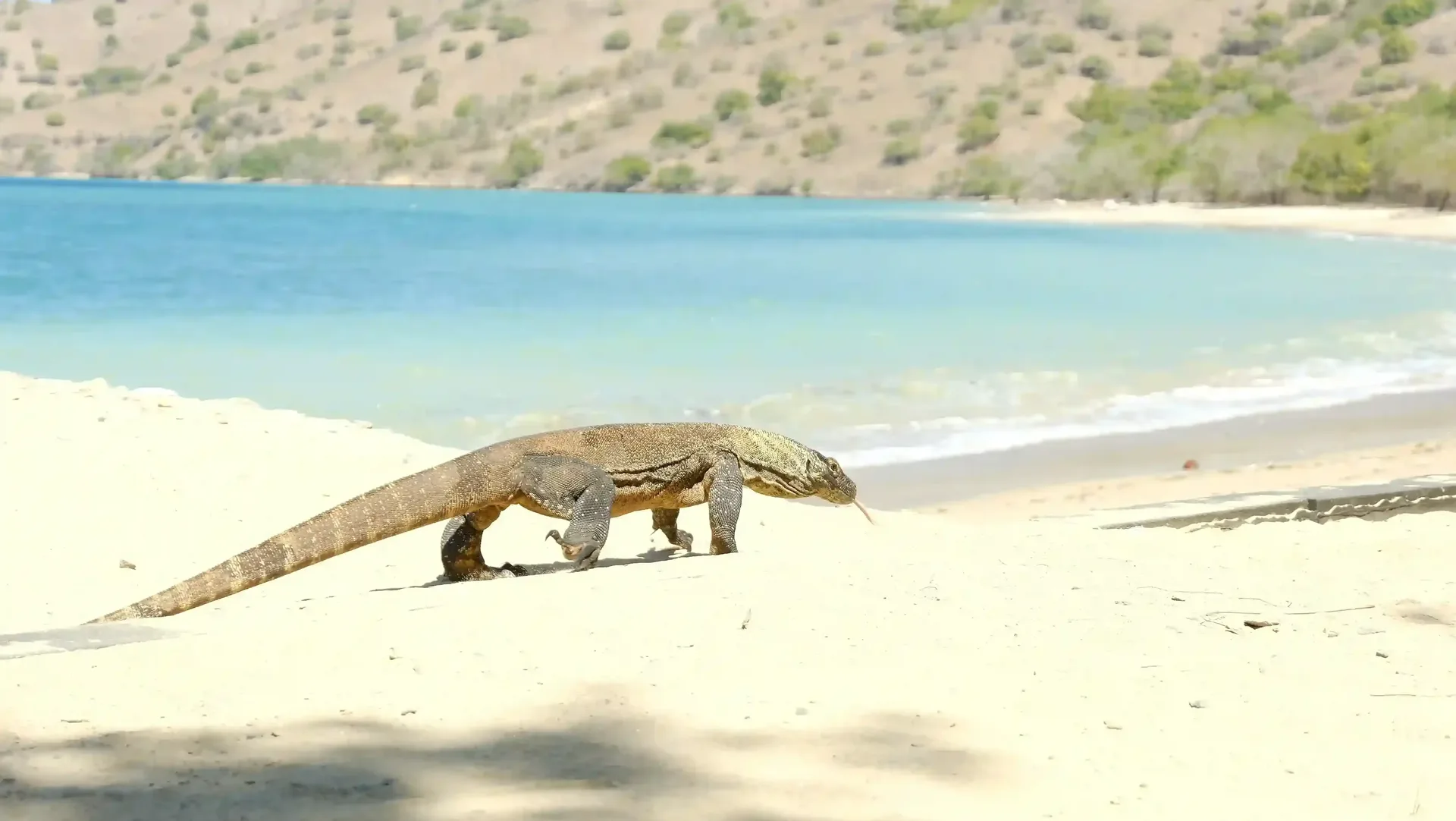
There are very few places left on Earth where you can observe a genuinely wild apex predator on foot, at a respectful distance, in the landscape it has ruled for millions of years. Komodo Island is one of them. This is the encounter that gives the national park its name, and for most guests aboard our Bali–Komodo liveaboard cruises, it is the moment the whole voyage is built around.
Komodo Island is the namesake heart of Komodo National Park, a UNESCO World Heritage Site, and home to the world's largest lizard — the Komodo dragon. Visitors walk ranger-guided trails from Loh Liang, where dragons are frequently seen, conditions permitting. Most guests arrive by liveaboard after a short flight from Bali to Labuan Bajo.
Meet the Komodo Dragon
The Komodo dragon (Varanus komodoensis) is the largest lizard alive today. Mature males can reach around three metres in length and weigh upwards of seventy kilograms, moving with a low, deliberate swagger that makes them unmistakable even from a distance. Despite their bulk, dragons can move quickly in short bursts, which is exactly why every walk in the park is led by licensed rangers.
Dragons are ambush hunters. They feed on deer, wild boar and water buffalo, aided by a venomous bite that has fascinated biologists for decades. In the wild they exist only in this small corner of Indonesia — Komodo, Rinca and a handful of neighbouring islands — and the entire wild population numbers only a few thousand individuals. Seeing one here is seeing one of the rarest large predators on the planet in its only home.
Ranger-Guided Walks at Loh Liang
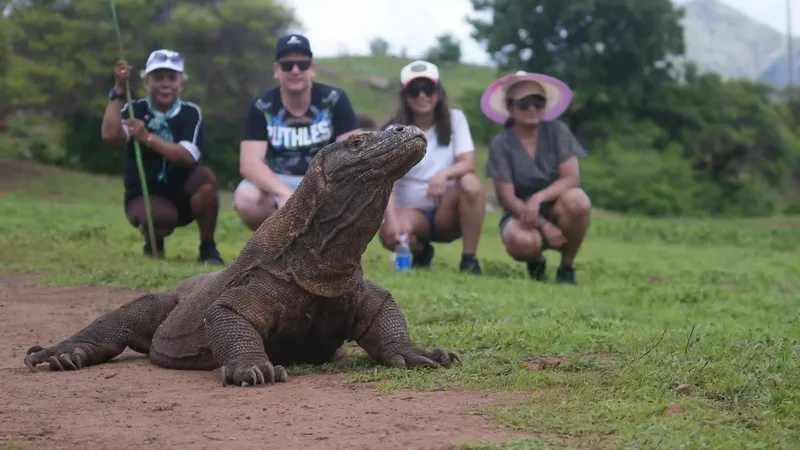
All visits to Komodo Island begin at Loh Liang, the ranger station on the island's sheltered eastern bay. Your cruise crew handles park formalities while you land by tender, and licensed rangers then accompany your group for the entire walk. Rangers read the terrain constantly — they know the resting spots, the water holes and the individual animals' habits better than anyone.
Choosing Your Trail
Sightings are frequent on all three routes, conditions permitting, but this is wild nature — no ethical operator guarantees them. What we can do is time your landing well: early morning and late afternoon walks tend to coincide with the dragons' most active hours, and a liveaboard anchored overnight nearby makes those golden windows easy to hit. Our 4-day, 3-night Komodo liveaboard is paced around exactly this kind of timing.
- Short trail (roughly 30–45 minutes): an easy loop through open woodland near the station — the usual choice for families and warm midday landings.
- Medium trail (around 1–1.5 hours): crosses savannah and dry forest towards a low viewpoint, balancing wildlife time with scenery.
- Longer treks (2 hours or more): for keen walkers, rangers can lead extended routes deeper into the valleys where dragon activity, birdlife and megapode nest mounds are richer.
Safety and Dragon Etiquette
Walking with dragons is very safe when the simple rules are respected. Incidents are extremely rare, and rangers manage every encounter carefully. You will be briefed before landing, and the essentials are easy to remember:
- Stay with your ranger and group at all times; never wander off the trail.
- Keep a generous distance — rangers will position you for photographs safely.
- Move calmly and avoid sudden gestures near an animal.
- Do not eat on the trails, and tell your ranger about any open wounds; guests who are menstruating are asked to inform the ranger discreetly, as dragons have an acute sense of smell.
- Wear closed shoes, and bring a hat and water — the savannah is hot and shadeless in places.
Best Season for Dragon Encounters
Komodo National Park is at its best in the dry season, roughly April to September, when trails are firm, skies are clear and seas are calm. Dragons are visible year-round, though behaviour shifts with the calendar: the dry months concentrate animals near water sources, while the mating season around July and August often brings dramatic male sparring. The wetter months from roughly November to March turn the savannah briefly green and keep visitor numbers low.
Whenever you travel, arriving by boat gives you the decisive advantage of flexibility — if the morning is better on Rinca Island, or the light is perfect on Padar's ridgeline, your itinerary can flex around it.
Beyond the Dragons: Pink Beach and the Island's Coastline
Komodo Island is far more than its famous resident. Its eastern shore hides one of the park's icons — Pink Beach, where crushed red coral tints the sand a soft rose and the house reef begins a few fin-kicks from shore. Many itineraries pair the morning dragon trek with an afternoon of swimming and snorkelling here, a contrast that sums up Komodo perfectly: prehistoric savannah above the waterline, technicolour reef below it.
The surrounding straits also hold some of the park's best-loved dive and snorkel sites, from the manta cleaning stations of Manta Point to the current-swept coral pinnacle of Batu Bolong, both reachable within a short cruise of the anchorage.
Frequently Asked Questions
Are Komodo dragons dangerous to visitors?
Can I see Komodo dragons year-round?
How long is the trek at Loh Liang?
Is Komodo Island better than Rinca for seeing dragons?
What should I wear for the dragon trek?
Visiting Komodo Island on a Luxury Liveaboard
The island sits deep inside the national park, and day boats from Labuan Bajo spend much of their day simply getting there and back. A liveaboard reverses that equation: you sleep on board within the park, wake at anchor near Loh Liang and step ashore before the crowds and the heat arrive. Most guests fly from Bali to Labuan Bajo in about ninety minutes and board the same day — the full run-through is in our Bali-to-Komodo departure guide.
Komodo Island features on virtually every route we sail, from a 3-day, 2-night liveaboard to week-long expeditions. If you are weighing options, our guide to how many days to spend in Komodo is the best place to start, and our cruise packages and pricing page explains what each tier of boat includes. Every vessel comes from our own and partner fleet, operated to one standard with Komodo Luxury (Juara group).
Plan Your Komodo Cruise
Share your dates, group size and interests — our specialists reply with matched boats, a day-by-day plan and a transparent quote.
WhatsApp: +62 811-3941-4563