
Destination
Taka Makassar: Komodo’s Turquoise Crescent Sandbar
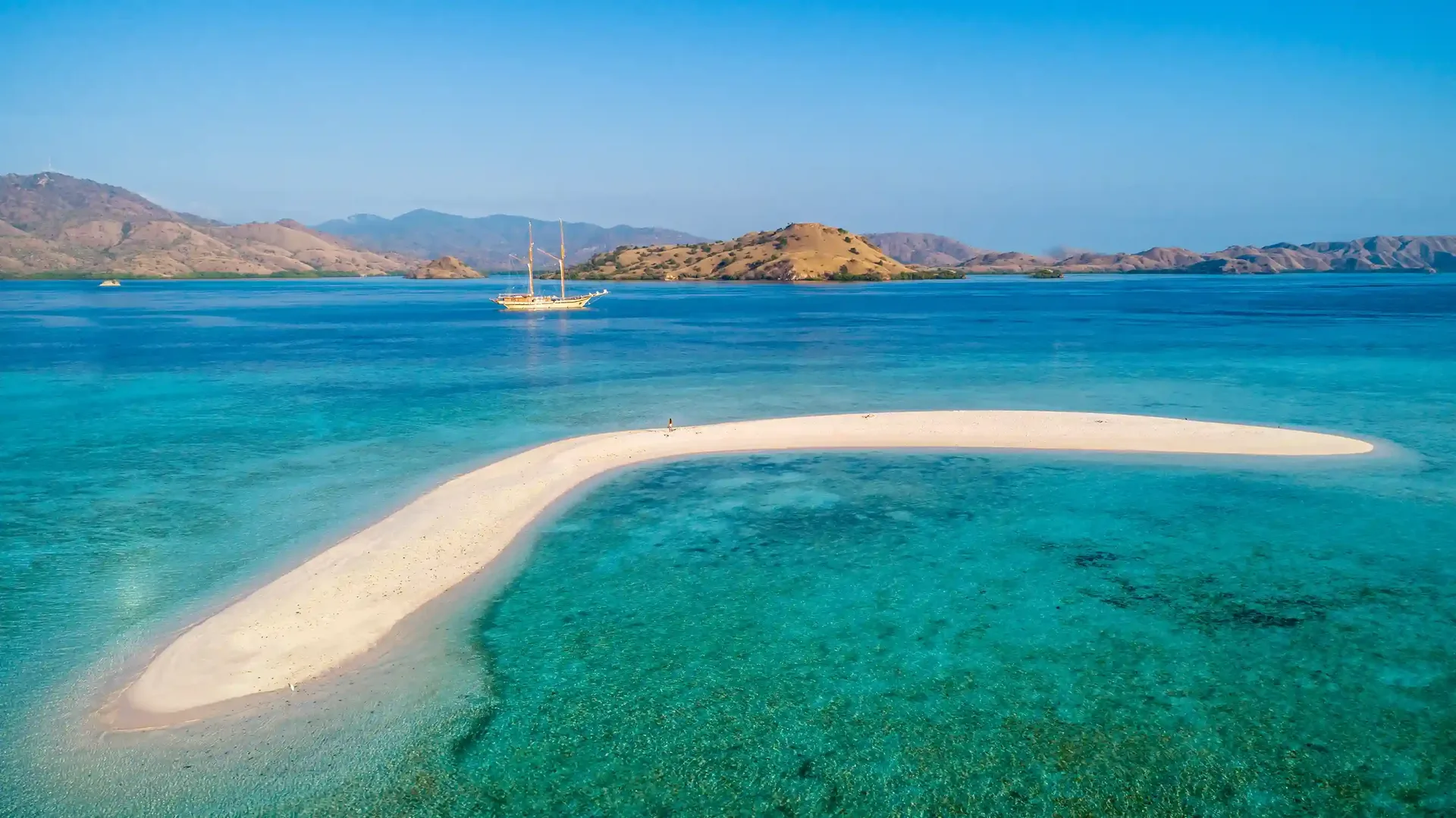
Taka Makassar is a tiny crescent of powder-white sand rising from a turquoise lagoon in the heart of Komodo National Park. Reached only by boat, it sits beside the famous Manta Point drift, making it the park's most photogenic swim-and-sandbar stop on any luxury liveaboard route.
What Makes Taka Makassar So Special
Komodo is a park of big drama — dragons, ridgelines, roaring currents. Taka Makassar is the opposite: a sliver of sand a few hundred metres long, alone in a lagoon whose blues look colour-graded even before you edit a single photo. There is no jetty, no shade, no structure of any kind. That emptiness is the entire point.
The name refers to the reef it crowns — a taka is a patch reef in local usage — and the sandbar is simply its highest, driest tip. Step off the tender into knee-deep water and you are standing in the middle of the sea, ringed by gradients of aquamarine that deepen to navy at the reef edge.
The Sandbar Experience
A typical visit is unhurried by design. Your crew anchors in the deeper water nearby and runs you across by tender. Most guests spend an hour or so wading the shallows, floating in bath-warm water, and walking the crescent from tip to tip — a stroll that takes minutes and produces a camera roll that takes days to sort.
Because there is no natural shade, crews time visits for softer light where the route allows, and bring water, fruit and umbrellas ashore. Travelling as a couple? This is one of the stops where a private setup — just the two of you on the sand while the boat waits off — turns a photo stop into a memory, a touch we build into our Komodo honeymoon cruises.
Next Door to Manta Point
Taka Makassar's location is half its magic. It lies alongside Karang Makassar — better known as Manta Point — the long drift where reef manta rays gather at cleaning stations. Mantas are seen here year-round, frequently and sometimes in numbers, conditions permitting; sightings are strongest in some months but never guaranteed, because these are wild animals on their own schedule.
The classic sequence is a morning drift snorkel or dive with the mantas, then a celebratory hour on the sandbar while the crew prepares lunch. If you are weighing mask-and-fins options, our guide to diving versus snorkeling in Komodo explains how both experience this corner of the park.
Tides Change Everything — Timing Your Visit
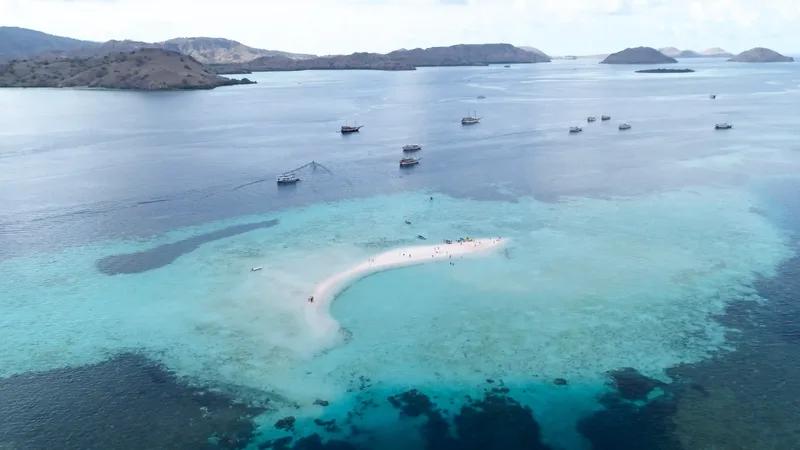
Taka Makassar breathes with the tide. At low water the crescent stretches out generously; at high water it shrinks to a narrow bar with the shallows lapping over its edges — beautiful in a different way, with the sand seeming to hover beneath a film of glass. Neither state is better; they are simply different photographs.
This is exactly the kind of detail a specialist operator sweats so you never have to: our captains read the tide tables against your route and slot the sandbar into its best hour. It is a small example of why an overnight cruise outperforms a rushed speedboat loop — a comparison we make honestly in liveaboard versus day trip.
- Low tide: maximum sand, long reflective flats, the classic aerial-style panorama.
- Mid tide: the best wading — knee-deep turquoise in every direction.
- High tide: the "floating sandbar" effect; on the biggest tides the bar can all but disappear, so crews plan around the tables.
Where Taka Makassar Fits in Your Route
The sandbar sits in the central corridor of the park, so it combines effortlessly with the headline stops:
All of our Bali–Komodo liveaboard routes begin with the short flight from Bali to Labuan Bajo, and the packages and pricing overview shows how each duration weaves the sandbar in.
- On the 4-day, 3-night liveaboard, it typically follows the Padar sunrise hike and precedes an afternoon at Pink Beach.
- The 5-day, 4-night cruise adds breathing room — many guests visit twice, at different tides.
- Nearly every route pairs it with Padar Island, whose ridge viewpoint and the sandbar make Komodo's two most iconic photographs in a single day.
Frequently Asked Questions
Does Taka Makassar disappear at high tide?
Can you snorkel at Taka Makassar itself?
How close is Manta Point to the sandbar?
How long do we get on the sandbar?
Is Taka Makassar crowded?
Photography Tips for the Sandbar
- Go high if you can. The crescent shape only reveals itself with elevation — a drone (where permitted under park rules; ask your cruise director) or even a raised deck angle transforms the shot.
- Shoot the gradients. Kneel low at the waterline and let the bands of blue stack behind your subject.
- Polarise. A polarising filter — or simply angling away from glare — deepens the turquoise dramatically.
- Protect your gear. There is no dry surface but the sand itself; a dry bag on the tender is essential.
- Put the camera down for ten minutes. Standing in the middle of the sea with nothing on the horizon is the actual souvenir.
Plan Your Komodo Cruise
Share your dates, group size and interests — our specialists reply with matched boats, a day-by-day plan and a transparent quote.
WhatsApp: +62 811-3941-4563