
Dive site
Manta Point (Karang Makassar), Komodo
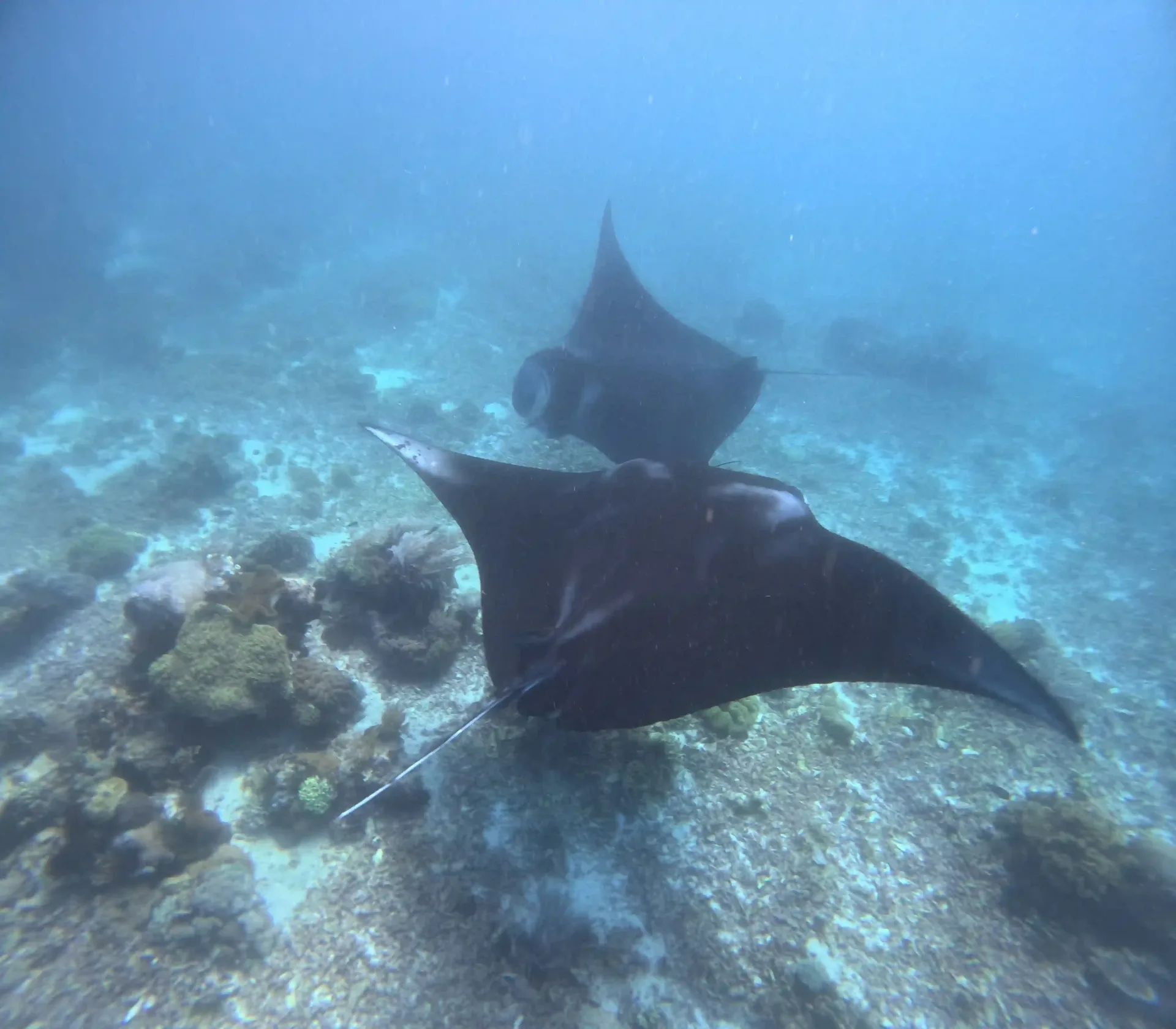
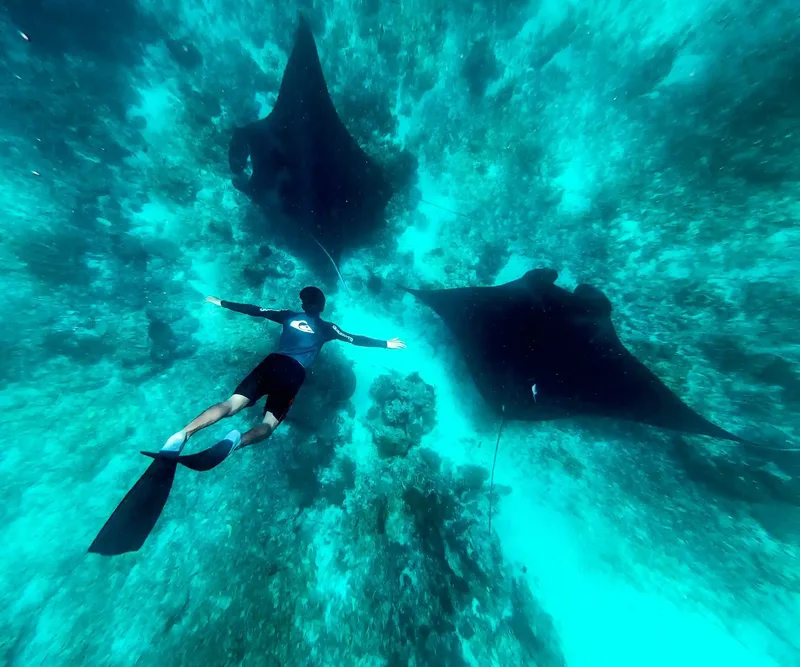
Ask anyone who has cruised Komodo for their single sharpest memory and, more often than not, it is this: hanging in mid-water while a manta with a wingspan wider than a car banks overhead, unhurried, close enough to count the markings on its belly. Manta Point delivers that moment more reliably than almost anywhere in Indonesia, which is why virtually every Bali–Komodo liveaboard we plan builds a visit into the route.
Manta Point (Karang Makassar) is Komodo's most famous marine encounter — a long, shallow drift over a coral-rubble plateau where reef manta rays gather at cleaning stations. Mantas are present year-round and frequently seen, conditions permitting, and because the site is shallow, divers and snorkelers experience it side by side.
Why Mantas Gather Here
Manta Point — marked on charts as Karang Makassar — is a kilometres-long stretch of shallow rubble and scattered coral heads lying in the current line between Komodo and the central islands. Two things bring the mantas in. The moving water delivers plankton, their food. And the coral heads host cleaner wrasse, tiny fish that pick parasites from a manta's skin and gills.
The result is a cleaning station: mantas queue, circle and hover over the same coral outcrops day after day, the marine equivalent of a spa with regulars. That fidelity to place is what makes sightings so consistent here compared with open-water luck elsewhere. It is behaviour you can read more about in our Komodo marine life guide.
How the Dive and Snorkel Work
This is one of the easiest signature dives in the park. The plateau sits shallow, the bottom is flat, and the technique is simple: enter up-current, settle low, and let the flow carry you gently along the rubble while the guide scans for shapes ahead.
- Drift style: a relaxed one-way drift; the tender follows your bubbles and collects you at the end — no navigation required.
- When mantas appear: the group settles to the bottom at a respectful distance and lets the animals control the encounter. Patience is repaid; chasing empties the site.
- Snorkelers: because the action happens in shallow water, surface swimmers routinely enjoy encounters as good as the divers below — one reason we call this the great equaliser of diving versus snorkelling in Komodo.
- Conditions: current is usually mild to moderate; your crew times the visit to the tide window that suits the group aboard.
Best Season for Manta Rays
Mantas live in Komodo year-round, so there is no month to avoid. The April–September dry season pairs manta drifts with the park's calmest seas and clearest island days. From December to February, plankton blooms bring strong sightings at some sites — the water is greener, and the mantas are often busiest. Whenever you sail, crews check recent activity daily and slot Manta Point into the hour it fishes best.
The Perfect Manta Day
Geography does Manta Point a favour: it sits beside Taka Makassar, the crescent sandbar that barely clears the tide, and within easy reach of the Padar ridge. A classic cruising day runs sunrise hike, mid-morning manta drift, champagne lunch off the sandbar, and an afternoon reef such as Siaba Besar for turtles. It is the day that sells Komodo in a single photograph — and every boat in our own and partner fleet, operated to one standard with Komodo Luxury (Juara group), knows how to choreograph it.
Which Cruises Include Manta Point
Almost all of them. Even the komodo 3 day 2 night liveaboard fits a manta drift between Padar and Pink Beach, while the 8-day diving cruise typically returns for a second pass once divers have their eye in. Longer routes add the northern pinnacles — Batu Bolong and Castle Rock — around the manta days. For route-by-route detail, see the cruise packages and pricing overview or ask our specialists to match a boat to your dates.
Frequently Asked Questions
Are manta sightings guaranteed at Manta Point?
Can I experience Manta Point without a dive certification?
How deep is the dive at Manta Point?
When is the best time of year for mantas?
What else is near Manta Point?
Manta Manners: How We Keep Encounters Wild
Reef mantas are protected in Indonesian waters, and good etiquette is what keeps this site extraordinary. Our guides brief every guest before the first drop: keep several metres' distance, approach from the side rather than from above or behind, never touch or chase, and stay low when the animals are cleaning. Give a manta space and it will often reward you with pass after curious pass.
Plan Your Komodo Cruise
Share your dates, group size and interests — our specialists reply with matched boats, a day-by-day plan and a transparent quote.
WhatsApp: +62 811-3941-4563