
Travel guide
Komodo Liveaboard vs Day Trip: Which Should You Choose?
A liveaboard is the better way to experience Komodo for most travellers: you sleep inside the national park, reach Padar and Pink Beach at dawn before the crowds, and catch sunset spectacles no speedboat can stay for. A day trip suits only genuinely tight schedules — one long day, highlights only.
The Short Answer
Both formats visit the same headline sights. The difference is when you see them and how it feels. Day trips compress Komodo into roughly ten to twelve hours from Labuan Bajo, arriving at each stop in the busiest window of the day. A Bali Komodo liveaboard turns the park into your neighbourhood: anchorages at dusk, ridge walks at first light, and snorkel sessions that end when you are ready, not when the schedule says so.
If you have two or more nights to spare, the liveaboard wins on almost every measure. If you truly have a single day, a well-run day trip is still worth taking — Komodo is extraordinary even in fast-forward.
What a Day Trip Actually Looks Like
Day tours leave Labuan Bajo early by speedboat and chase a fixed loop: the Padar viewpoint climb, a ranger-guided dragon walk on Komodo or Rinca, a stop at Pink Beach, and — sea conditions permitting — a snorkel at Manta Point. Each stop is timed, and every other day boat is working the same loop in the same order.
It is a highlights reel — genuinely spectacular, but a reel nonetheless.
- Time on site: typically 45–90 minutes per stop, midday heat included.
- Crowds: you arrive when everyone else does — the viewpoint queue is real in high season.
- Sea time: two to three hours of fast, sometimes bumpy transits each way.
- What you miss: sunrise, sunset, night skies, and every corner of the park beyond the central loop.
What a Liveaboard Changes
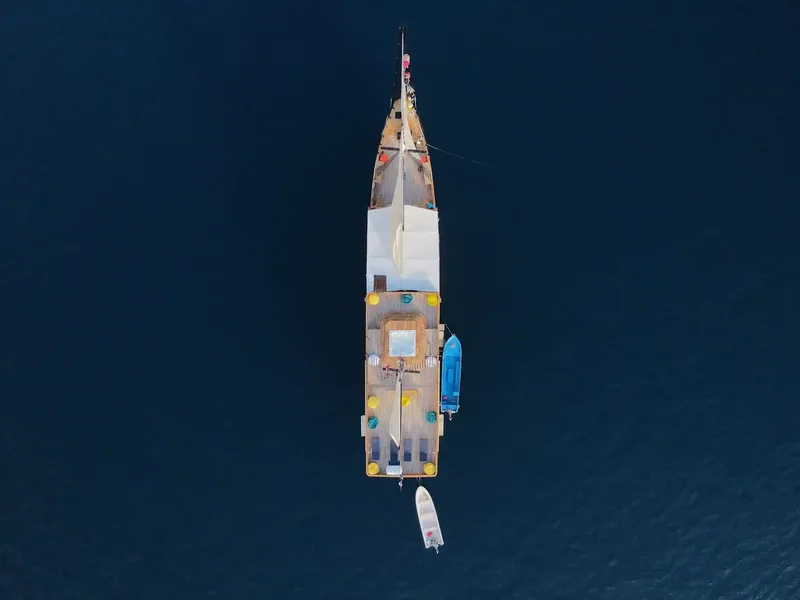
Staying aboard rewrites the clock. You wake already anchored beneath Padar Island and start the climb while day boats are still loading in the harbour. You linger at Pink Beach after the fleet leaves, when the rose-tinted sand is yours. And you end the day at Kalong Island, where thousands of flying foxes stream out of the mangroves at sunset — a spectacle that simply does not fit inside a day trip's return schedule.
Between the icons, a liveaboard reaches what day boats never touch: the Taka Makassar sandbar at slack tide, quiet ridge walks on Gili Lawa Darat, and dive or snorkel sessions at sites chosen for the day's conditions rather than a fixed loop. Our itineraries from 3 to 10 days are built around those timing advantages.
Side by Side: Seven Deciding Factors
- Time in the park
- a day trip nets five to six hours ashore and afloat; even a short 3-day, 2-night liveaboard triples that.
- Crowd timing
- liveaboards work the golden hours; day boats share the midday peak.
- Wildlife windows
- dragons are more active in the cool morning; mantas are frequently seen at cleaning stations, conditions permitting — flexibility raises your odds on both.
- Comfort
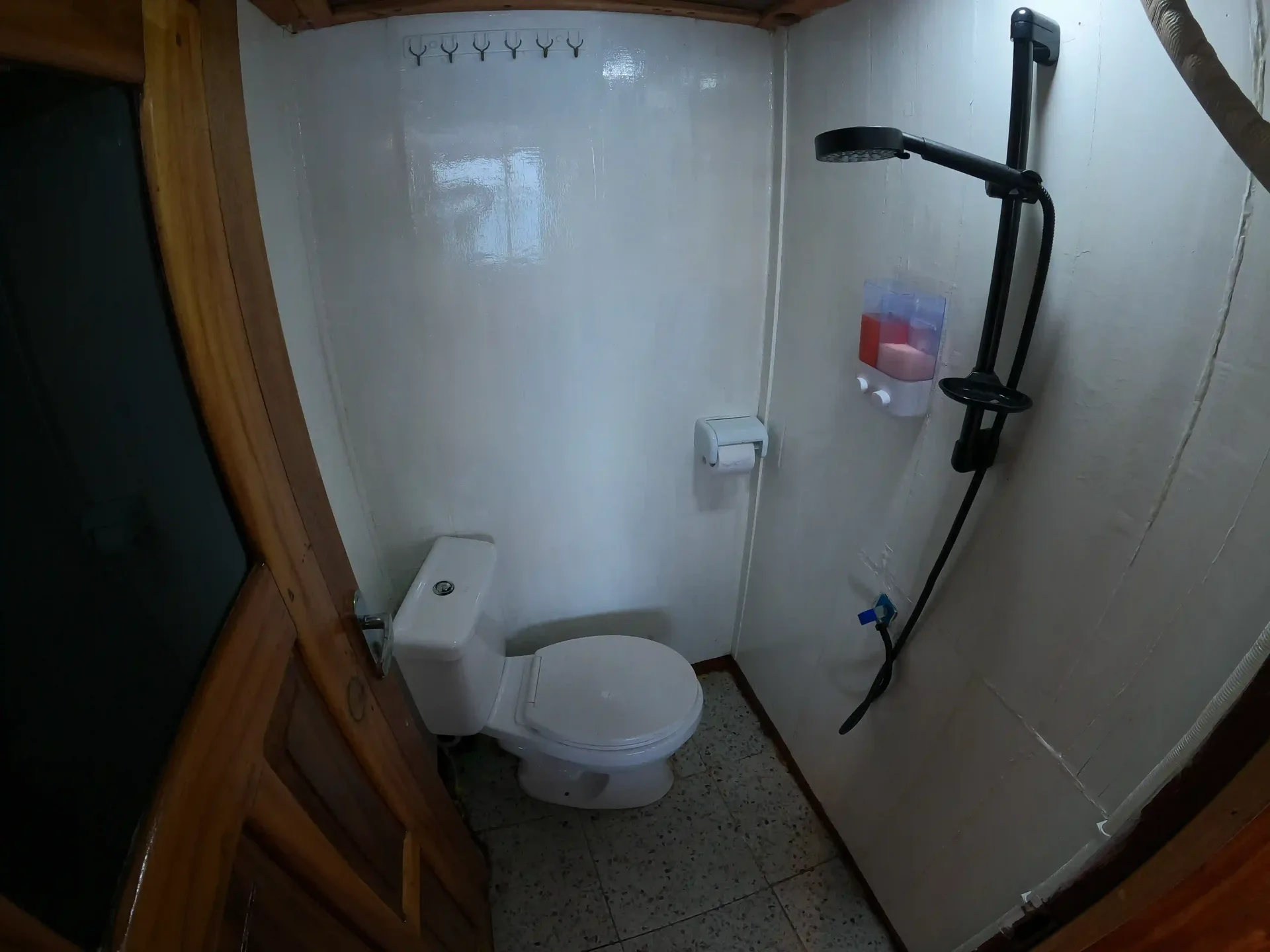
- an air-conditioned ensuite cabin, chef-cooked meals and a shaded sundeck versus a bench seat and a boxed lunch.
- Sea motion
- liveaboards move mostly in calm inner waters and at gentle speeds; fast day boats pound more in a swell.
- Photography
- dawn light on Padar, dusk at Kalong, and star fields at anchor — none reachable on a day schedule.
- Value
- a day trip is cheaper in absolute terms, but per meaningful hour in the park, multi-day cruising is the stronger buy — see packages & pricing for how quotes are built.
When a Day Trip Is the Right Call
Be honest about your constraints. A day trip makes sense if you have exactly one free day in Labuan Bajo, if you are testing whether boat travel suits you before committing to a longer voyage, or if a family member cannot comfortably overnight at sea. It also works as a scouting run: many guests return the following year for the full cruise.
When the Liveaboard Wins
Choose the liveaboard if Komodo is a main event of your trip rather than a side excursion. Couples on a honeymoon cruise, families taking a private group charter, photographers, snorkelers and divers all get disproportionate returns from staying inside the park. Divers especially: sites such as Manta Point and the northern pinnacles reward the flexible timing only a liveaboard offers.
Not sure how long to sail? Our guide to how many days you need in Komodo compares every duration, and the popular 4-day, 3-night itinerary is the sweet spot for most first-timers.
Frequently Asked Questions
Is a Komodo day trip worth it at all?
How much more time in the park does a liveaboard give?
Will I get seasick on a liveaboard?
Can I see Komodo dragons on both formats?
What does each format cost?
How the Fly-Cruise Works from Bali
Reaching either format is simple: fly Bali to Labuan Bajo in about 90 minutes — several airlines fly daily — and the harbour is minutes from the airport. Liveaboard guests board the same morning and are inside the park by lunch. Full ocean crossings from Benoa Harbour are possible on request on suitable vessels for those who love long sea days. Our departure logistics guide covers flights, transfers and boarding-day timing, and the fleet pages show which boat classes run each route.
Plan Your Komodo Cruise
Share your dates, group size and interests — our specialists reply with matched boats, a day-by-day plan and a transparent quote.
WhatsApp: +62 811-3941-4563