
Destination
Kalong Island Flying Foxes: Komodo’s Sunset Bat Exodus
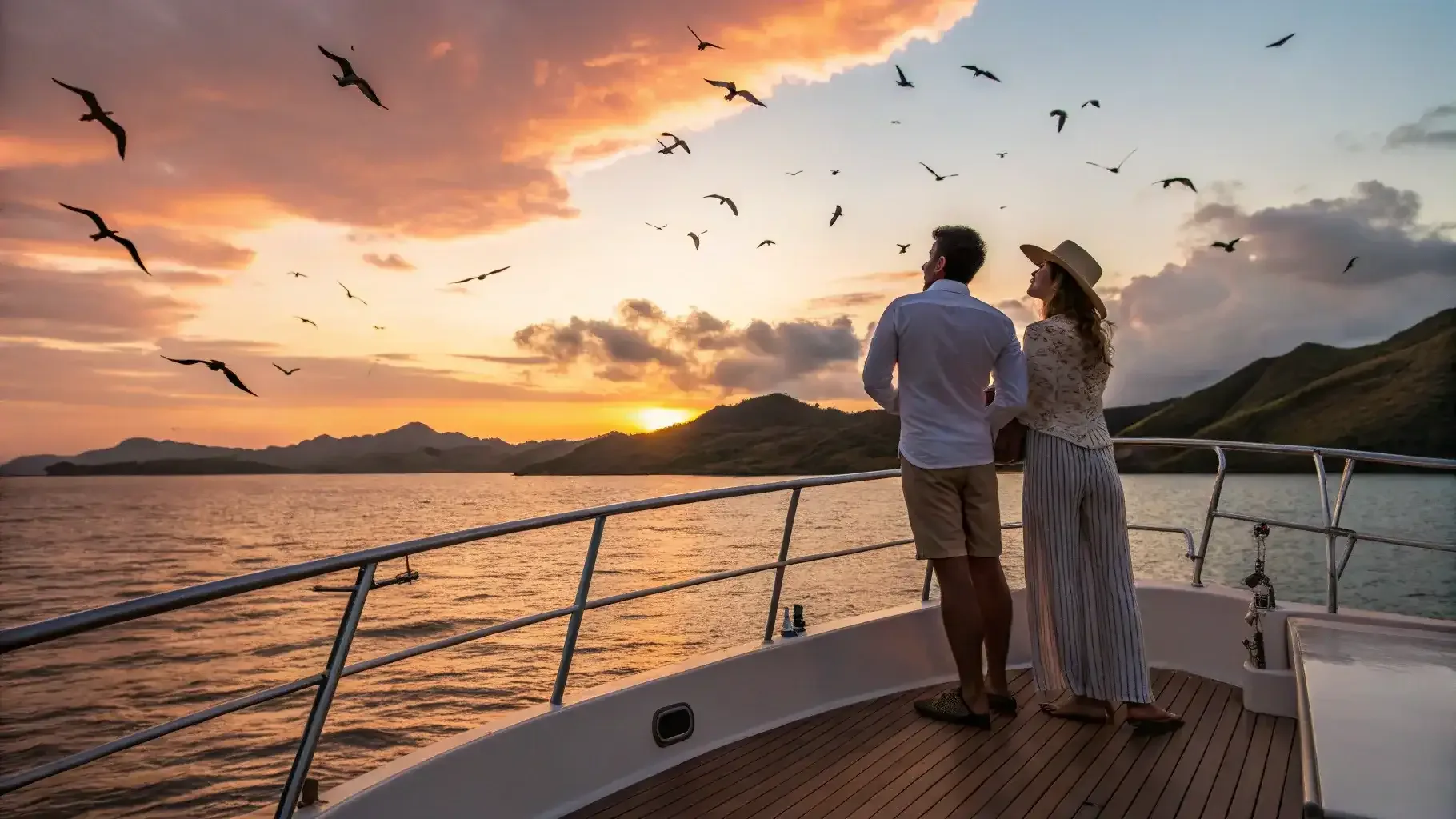
Kalong Island is a small mangrove islet in Komodo National Park where enormous colonies of flying foxes — fruit bats with wingspans over a metre — stream into the sunset sky at dusk. Most liveaboards anchor nearby on the first evening, so you watch the entire exodus from your own deck.
Why Kalong Island Is the Classic First Evening in Komodo
Ask any Komodo crew where they take guests on night one and the answer is almost always the same: Pulau Kalong. The name means "flying fox island" in Indonesian, and it earns it. This low ring of protected mangroves sits between Labuan Bajo and Rinca Island, which makes it a natural first anchorage after you board in the afternoon.
The timing works beautifully. You fly from Bali to Labuan Bajo in around 90 minutes, transfer to the harbour, settle into your cabin, and by the time the light turns gold your boat is positioned with the mangroves silhouetted ahead. Our Bali-to-Komodo departure logistics guide walks through exactly how that first day flows.
The Sunset Exodus: What You Will See
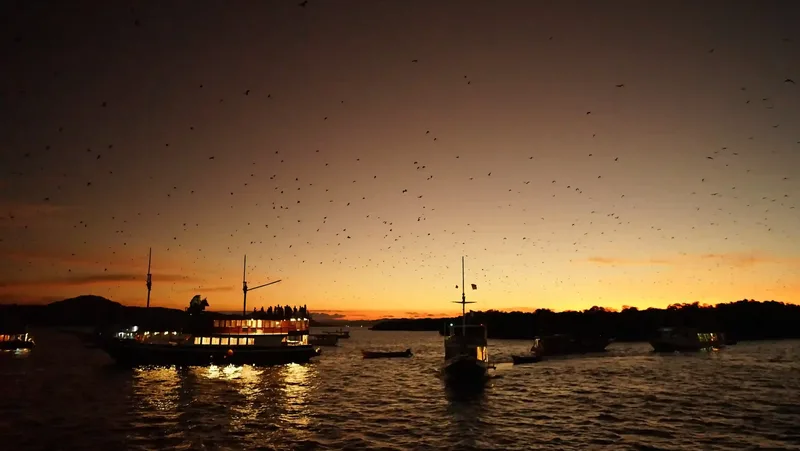
Flying foxes are the world's largest bats — fruit-eaters, not the small insect-hunters most people picture. Through the day the colony hangs inside the mangrove canopy, out of sight. As the sun drops toward the horizon, a few scouts lift off. Then the sky fills.
For twenty minutes or more, wave after wave of bats pours out of the trees and heads toward Flores to feed on fruit and nectar through the night, returning to the roost around dawn. The spectacle happens most evenings year-round, though numbers and timing shift with weather, season and food supply — like all wildlife in the park, it is frequently seen, conditions permitting, never staged.
What surprises guests most is the sound and the scale. The colony is counted in the thousands, and against a burning Komodo sunset the long ribbons of silhouettes feel almost prehistoric — a fitting overture to a park famous for dragons.
Watching It from the Deck of a Luxury Liveaboard
Day boats have usually turned back to Labuan Bajo by the time the exodus begins. Staying overnight on a Bali–Komodo liveaboard is what makes Kalong effortless: your crew anchors at a respectful distance, sundowners appear on the deck, and you watch the whole performance without a single other logistical thought.
Because the mangroves are protected, boats do not land on Kalong itself. The viewing happens from the water, which suits the moment: the bats fly directly overhead, and the reflections double the show. It is one of the most quietly romantic hours in the park, which is why it anchors the first evening of our Komodo honeymoon cruise itineraries.
Where Kalong Fits in Your Cruise Route
Kalong slots naturally into the western entry corridor of the park, so nearly every route can include it without detours:
Longer voyages simply enjoy it earlier or later in the loop. If you are still weighing durations, our guide to how many days you need in Komodo compares the options honestly, and the packages and pricing overview shows how each route is put together.
- Short escapes: on a 3-day, 2-night Komodo liveaboard, Kalong is typically the first sunset, with Padar and the dragons the next morning.
- The most popular pace: the 4-day, 3-night itinerary pairs the Kalong evening with a relaxed morning at Kelor Island, whose short summit hike is an ideal warm-up.
- Dragon mornings: the anchorage sits close to Rinca Island, so many crews follow the bats with a ranger-guided dragon trek at first light.
Viewing and Photography Tips
- Be in position by about 17:00. The light before the exodus is half the magic, and departure time drifts with the season.
- Think silhouettes, not close-ups. Expose for the sky and let the bats read as dark shapes against the afterglow — phones handle this surprisingly well.
- Bring binoculars. The roosting colony, wings wrapped like leather umbrellas, is fascinating even before lift-off.
- Keep voices low. Sound carries over still water, and a quiet deck is part of the experience for every boat at anchor.
- Stay for the second act. Stragglers keep crossing well after the main waves, right into blue hour.
Frequently Asked Questions
What time do the flying foxes leave Kalong Island?
Can we land on Kalong Island or get close to the bats?
Is Kalong Island included in every Komodo itinerary?
Are the flying foxes dangerous to people on deck?
Will we definitely see the exodus on our cruise?
Best Time to Visit Kalong Island
The colony is resident, so the exodus can be seen in any month. The April–September dry season brings the clearest skies and the most reliably fiery sunsets, while the November–March wet season trades some certainty for dramatic cloudscapes and far fewer boats. Whichever season you sail, the bats leave at dusk — your only job is to be on deck with a drink in hand.
Plan Your Komodo Cruise
Share your dates, group size and interests — our specialists reply with matched boats, a day-by-day plan and a transparent quote.
WhatsApp: +62 811-3941-4563