
Destination
Pink Beach Komodo — Rose-Pink Sand & Snorkelling
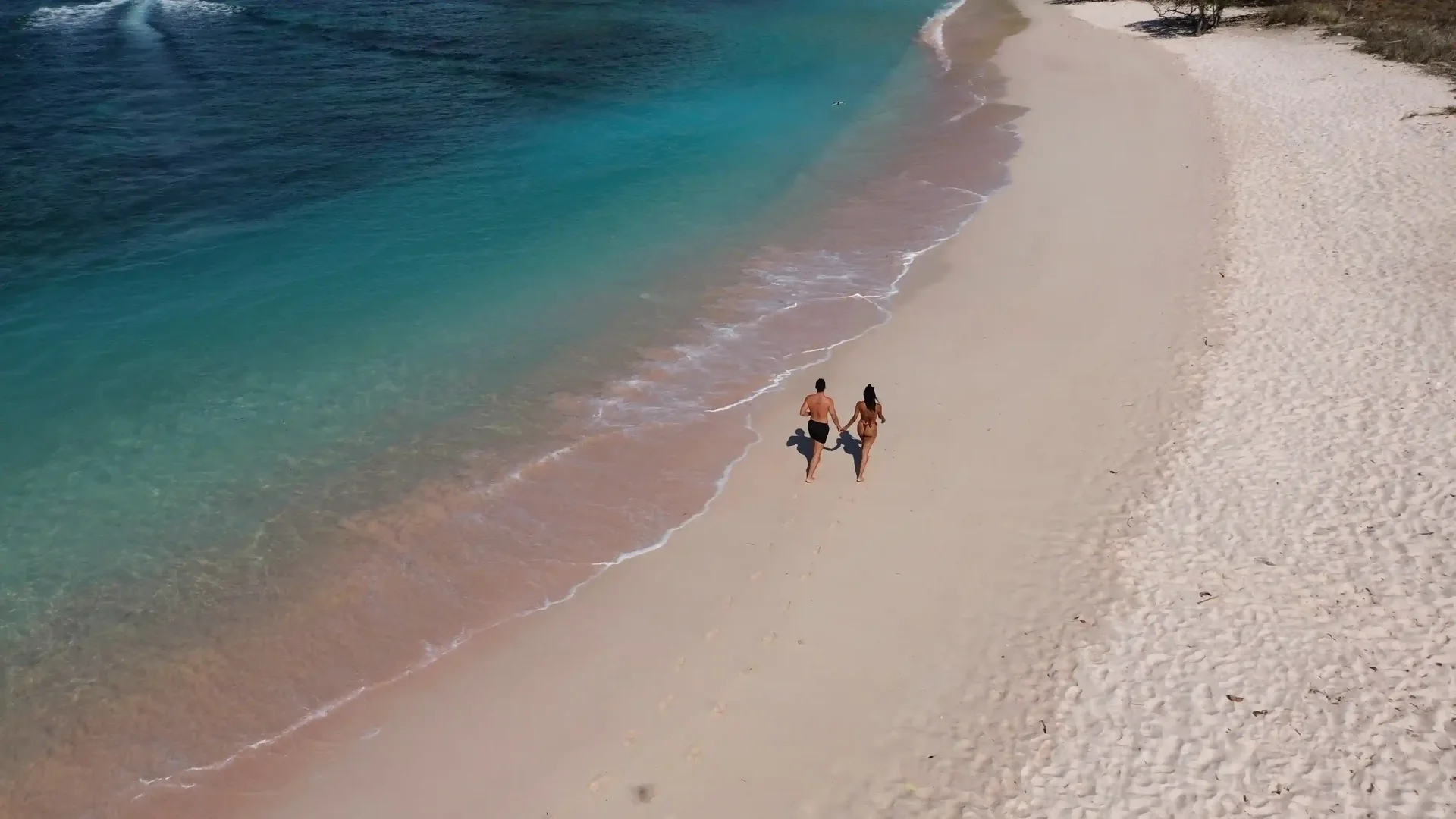
Locally called Pantai Merah, Pink Beach is the stop that photographs refuse to exaggerate. The colour is real, it shifts with the light, and it is strongest exactly where the sea meets the sand. Add a reef that begins a few fin-kicks from the beach, and it earns its place on nearly every Bali–Komodo liveaboard route we design.
Pink Beach, on Komodo Island, is one of a handful of beaches worldwide with naturally rose-pink sand — white grains blended with red fragments of organ-pipe coral. Guests snorkel a healthy coral garden straight off the shore, and the beach pairs naturally with Padar Island on the classic liveaboard day from Labuan Bajo.
Why the Sand Is Pink
The blush comes from the reef itself. Fragments of red organ-pipe coral and tiny red-pigmented marine organisms break down over time and mix with white calcium-carbonate sand. Where the surf concentrates the heavier red grains — along the swash line — the colour deepens to a genuine rose; higher up the beach it fades to a pale coral tint.
Several coves across Komodo National Park carry a pink cast, including one of the bays visible from Padar Island's ridge, but this beach on Komodo Island is the largest and most famous of them — the one that made the colour a signature of the park.
Frequently Asked Questions
Why is the sand at Pink Beach pink?
Where exactly is Pink Beach?
Is the snorkelling at Pink Beach good?
Are there Komodo dragons at Pink Beach?
Can I take some pink sand home?
What time of day is best to visit?
What It's Like Ashore
The beach faces a sheltered stretch of turquoise water backed by dry savannah hills — in the dry season the contrast of pink sand, blue sea and gold hillside is almost theatrical. Landings are by tender from your anchored boat. Because most guests arrive on liveaboards timed around the day-boat waves, an early or late visit often means long stretches of sand with nobody on them.
- Best photographed in bright overhead sun, when the pink reads strongest.
- Wet a handful of sand at the waterline to see the colour at full saturation.
- No facilities ashore — your crew brings water, towels and shade as needed.
Snorkelling Straight off the Beach
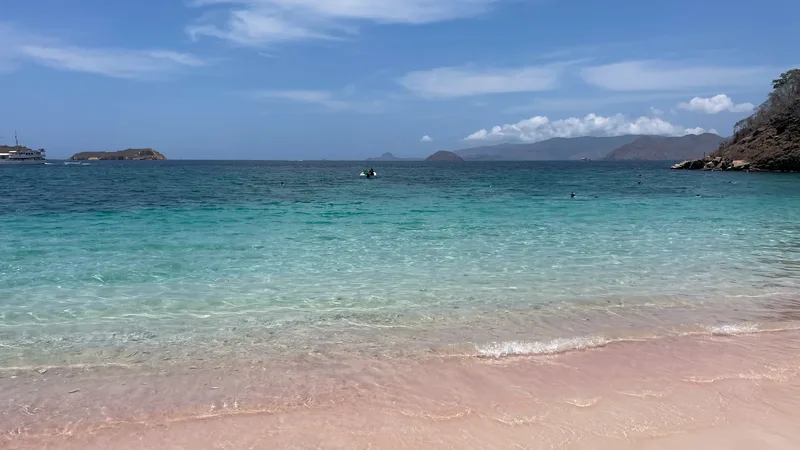
Pink Beach hides a second act underwater. A sloping coral garden starts close to shore: hard corals in good condition, dense reef fish, and the occasional turtle cruising the drop-off — frequently seen, conditions permitting. The entry is gentle enough for first-time snorkellers, which makes it a favourite family stop alongside sites like Siaba Besar.
Snorkellers who want to understand how these easy reef stops differ from the park's tank-only pinnacles will find our diving versus snorkelling guide useful — Komodo rewards both, often on the same day. Certified divers can browse the full dive site collection for the bigger, current-swept names.
Dragons and Beach Etiquette
Pink Beach is on Komodo Island — dragon territory — and although the beach itself is primarily a swim stop, dragons can and occasionally do wander shorelines. Your crew coordinates with park rangers, scans the beach before landings and keeps the group within sensible bounds. The rules are simple: keep your distance if one appears, follow your guide, and never bring food ashore.
One more rule matters here: the sand stays. Komodo is a protected UNESCO World Heritage Site, and removing sand, shells or coral is prohibited. Take the photographs; leave the pink.
How Our Cruises Visit Pink Beach
The classic sequence gives the beach its ideal slot: Padar's ridge at dawn, Pink Beach in the strong late-morning light, then a ranger-guided walk on Komodo Island in the afternoon. On northern routings it also combines beautifully with the Taka Makassar sandbar and Manta Point.
You will find it on virtually every departure, from a 4D3N Komodo liveaboard to a 5 day Komodo liveaboard and beyond — the difference longer routes buy is a quieter time slot and a longer swim. Our own and partner fleet, operated to one standard with Komodo Luxury (Juara group), coordinates timings so the beach is rarely shared with a crowd. Couples on our honeymoon cruises often get it close to private; families can compare route options in the packages and pricing overview.
Plan Your Komodo Cruise
Share your dates, group size and interests — our specialists reply with matched boats, a day-by-day plan and a transparent quote.
WhatsApp: +62 811-3941-4563