
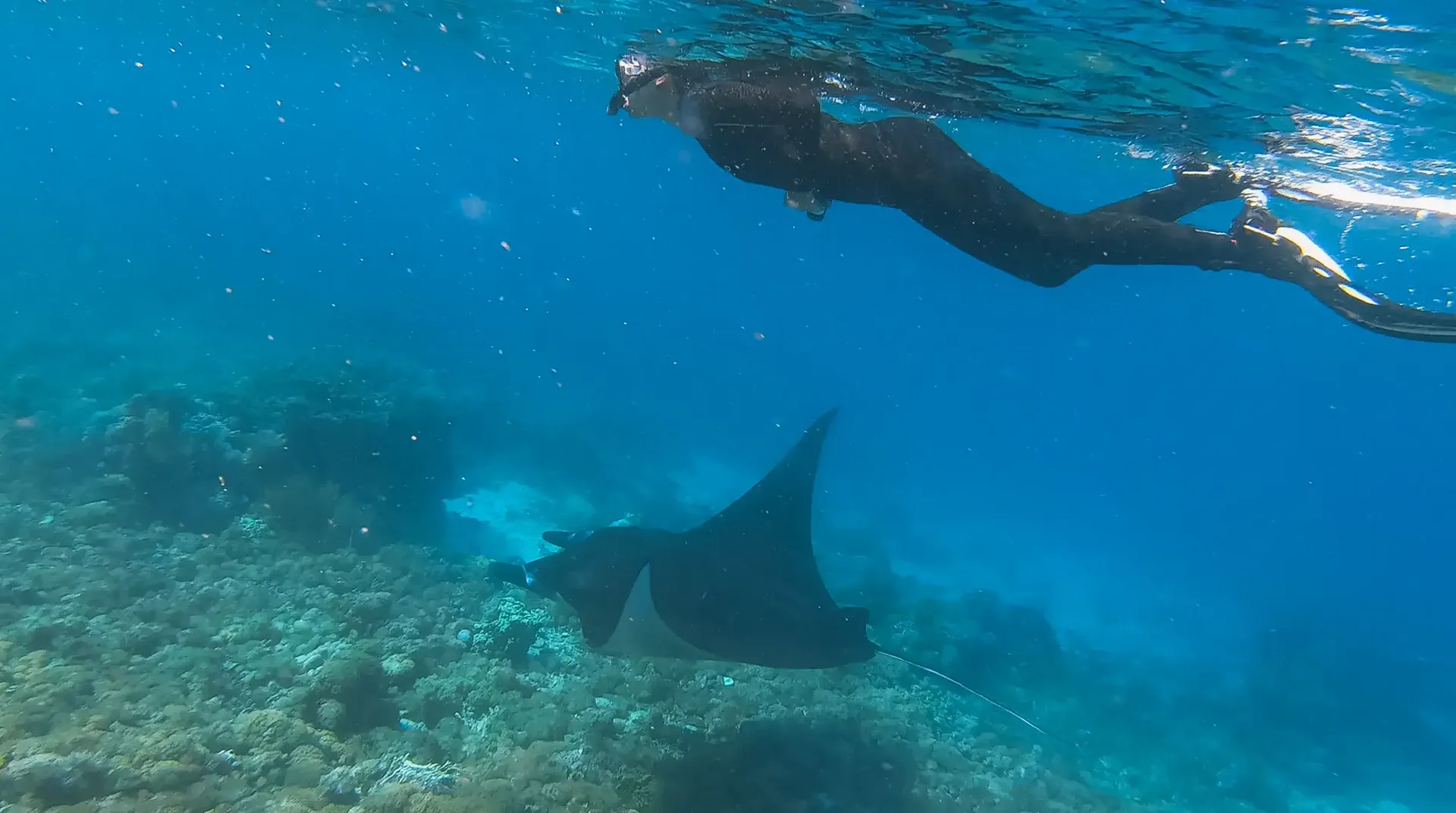
Dive site
Cannibal Rock Dive Site, Horseshoe Bay, Komodo
Cannibal Rock is southern Komodo's signature dive — a small seamount in Horseshoe Bay, between Rinca and Nusa Kode, carpeted in soft corals and crowded with rare macro life. Cooler, nutrient-rich water makes it Komodo's most colourful site, reached on our longer dive-focused liveaboard itineraries in the dry season.
Komodo's Most Colourful Dive
If the northern pinnacles are Komodo's theatre of big fish, Cannibal Rock is its jewel box. This modest seamount rises to within a few metres of the surface inside Horseshoe Bay, and almost every centimetre of it is alive: soft corals stacked on soft corals, feather stars waving from every ledge, tunicates and sponges in colours that look invented. Underwater photographers have treated it as a pilgrimage site for decades.
It is a slow dive by design. Where Castle Rock asks you to hold on and watch the blue, Cannibal Rock rewards divers who move a metre a minute and let the guides point out what the reef is hiding. Many guests call it the most surprising dive of their entire Bali Komodo liveaboard.
Where Is Cannibal Rock?
Cannibal Rock lies in Horseshoe Bay, the sheltered amphitheatre of water tucked between the southern coast of Rinca Island and the islet of Nusa Kode, in the far south of Komodo National Park. The name is a nod to the Komodo dragons that patrol the surrounding beaches — dragons are opportunistic feeders, and early visitors reported them turning on their own kind ashore.
Getting here takes commitment. The south is beyond day-trip range and only accessible in settled seas, which is exactly why liveaboards have Horseshoe Bay largely to themselves. Anchoring overnight beneath dragon-patrolled beaches, with a world-class reef a tender ride away, is one of the great experiences of the park.
Frequently Asked Questions
Where exactly is Cannibal Rock?
Why is the water colder in southern Komodo?
What macro life is Cannibal Rock famous for?
When can I dive Cannibal Rock?
Is Cannibal Rock suitable for beginners?
Will I see Komodo dragons in Horseshoe Bay?
Soft Corals and Rare Macro Life
All sightings are frequent rather than promised — this is wild water, and that is the point. Our Komodo marine life guide sets honest expectations for every corner of the park.
- Rhinopias — the holy grail of Indo-Pacific fish spotting, recorded here more reliably than almost anywhere in the park.
- Frogfish and scorpionfish — masters of disguise on every survey of the slope.
- Nudibranchs in remarkable variety — a macro photographer can spend a whole dive on ten square metres.
- Sea apples — the vivid purple-and-red filter feeders that have become the site's unofficial mascot.
- Dense invertebrate cover — crinoids, tunicates, sponges and soft corals competing for every surface.
Cooler Water, Richer Life
Southern Komodo is fed by upwellings that draw cool, nutrient-dense water up from the Indian Ocean. That is the engine behind Cannibal Rock's astonishing biomass — and it means noticeably cooler diving than the north, often in the low-to-mid twenties Celsius during the dry season. Most divers add a thicker wetsuit and many bring a hood; your crew will advise on exposure protection before the southern leg.
Currents inside the bay are generally kinder than at the northern pinnacles, though surge can wrap around the seamount. Divers with some experience get the most from the site, and guides tailor profiles for anyone still building confidence.
When and How We Dive It
The south is at its best in the dry season, roughly June to September, when Horseshoe Bay sits calm behind its headlands. Outside that window, swell can close the route entirely — one reason Cannibal Rock appears on longer routings rather than short samplers.
Across our own and partner fleet, operated to one standard with Komodo Luxury (Juara group), the site features on the 8 day Komodo diving liveaboard and the 10-day expedition cruise, which give the south the sea time it demands. Divers building a full park circuit often pair it with Manta Point and Batu Bolong in the centre of the park on the way. For private departures timed around the southern season, see our luxury yacht charter service or the packages and pricing overview.
Plan Your Komodo Cruise
Share your dates, group size and interests — our specialists reply with matched boats, a day-by-day plan and a transparent quote.
WhatsApp: +62 811-3941-4563