
Dive site
Crystal Rock Dive Site, Komodo National Park
Crystal Rock is a soft-coral-covered pinnacle in northern Komodo National Park, its tip breaking the surface at low tide. Famed for exceptional visibility, dense reef fish and patrolling white-tip sharks, it pairs naturally with neighbouring Castle Rock on the dive days of our Bali–Komodo luxury liveaboard itineraries.
A Pinnacle That Breaks the Surface
Crystal Rock earns its name twice over. First, the visibility: on a good day the water here is so clear that from the tender you can watch divers working the reef many metres below. Second, the rock itself: at low tide its highest point pierces the surface, a small dark marker in open blue water that tells you exactly where the dive begins.
Below the waterline, the pinnacle is one of the most densely decorated in the park. Soft corals in orange, purple and white crowd the shallows, anthias swarm over every surface, and the flanks drop away into deeper water where the bigger visitors patrol. Many guests rank it the most beautiful dive of their whole Bali Komodo liveaboard.
Where Is Crystal Rock?
Crystal Rock sits in the far north of Komodo National Park, close to the Gili Lawa islands and only a short tender ride from its famous neighbour Castle Rock. Liveaboards overnight in the sheltered anchorages nearby, which means you reach the site at first light and at the right tide — a luxury that day boats from Labuan Bajo simply cannot match.
Most dive-focused routings treat the two pinnacles as a pair: Castle Rock for the big-fish adrenaline, Crystal Rock for colour, clarity and composition. Diving both in one day is a highlight of any Bali to Komodo cruise built around the north.
What You'll See
For a fuller picture of what swims where across the park, our Komodo marine life guide breaks it down site by site and season by season.
- Soft-coral gardens — the shallow summit is carpeted in soft corals and sponges, alive with anthias and damselfish.
- Schooling reef fish — fusiliers, sweetlips, batfish and midnight snappers circling the pinnacle.
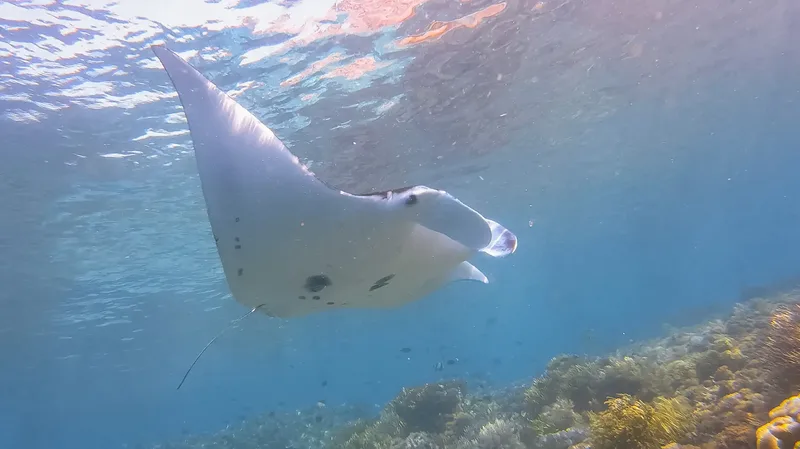
- Sharks and rays — white-tip reef sharks rest along the deeper ledges, and eagle rays pass through the blue, frequently seen, conditions permitting.
- Turtles and macro finds — hawksbill turtles graze the slopes, with nudibranchs and shrimp for sharp-eyed divers.
Conditions and Who It Suits
Crystal Rock is a touch more forgiving than Castle Rock, but it is still an open-water pinnacle in a national park famous for its tides. Currents are usually manageable at slack water and can strengthen quickly around the exposed corners, so guides plan entries carefully and keep groups small.
Comfortable intermediate divers get the most from the site. If you are newer to diving, crews begin the cruise at gentler sites such as Siaba Besar, building skills and confidence before the northern pinnacles. Strong snorkellers can sometimes float over the shallow summit at calm slack tide, though our diving versus snorkelling guide points surface swimmers to easier spots first.
How We Dive Crystal Rock
Across our own and partner fleet, operated to one standard with Komodo Luxury (Juara group), Crystal Rock is dived from tenders with experienced local guides who know the pinnacle's moods tide by tide. A typical plan drops you up-current, works the colourful shallows in a slow spiral, then finishes hanging off the summit as the fish carousel turns around you.
The site is photographed as much as it is dived — wide-angle in the soft-coral shallows is the classic shot — and dive decks across the fleet are set up with rinse tanks and camera tables for exactly this kind of day.
Frequently Asked Questions
Why is it called Crystal Rock?
What marine life will I see at Crystal Rock?
How does Crystal Rock compare to Castle Rock?
What experience level do I need for Crystal Rock?
Can snorkellers visit Crystal Rock?
Best Time and Itineraries
Northern Komodo dives well across much of the year, with the April–September dry season the prime window for calm seas and peak visibility. Crystal Rock appears on most dive-focused routings: the 8 day Komodo diving liveaboard and 10-day expedition cruise give the northern pinnacles the most time, while shorter cruises can include it when tides align. Boarding is simple — fly Bali to Labuan Bajo in around 90 minutes, and our departure and logistics guide covers the rest.
Plan Your Komodo Cruise
Share your dates, group size and interests — our specialists reply with matched boats, a day-by-day plan and a transparent quote.
WhatsApp: +62 811-3941-4563