
Travel guide
Komodo Marine Life Guide: Mantas, Turtles, Sharks & Where to See Them
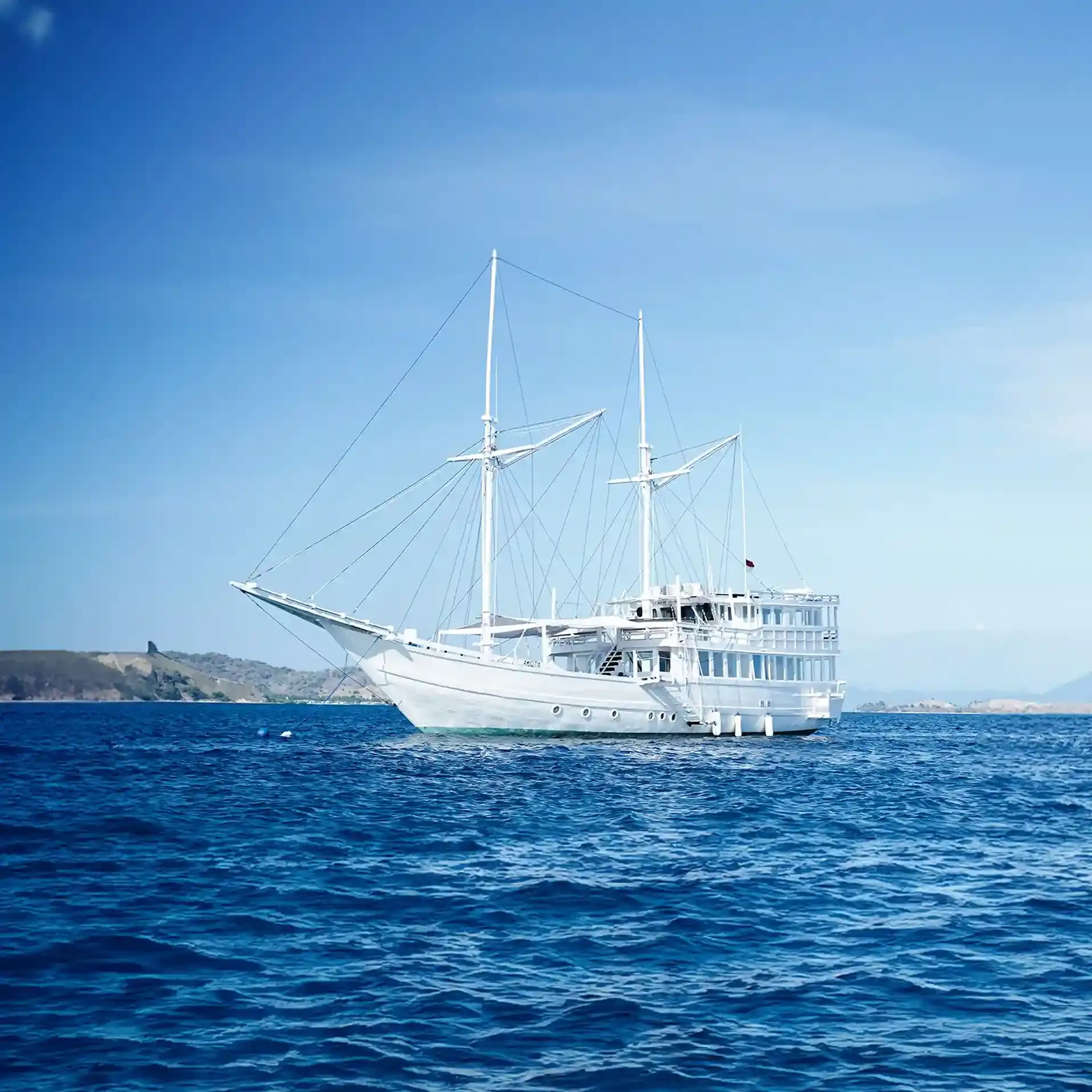
Most guests book a Komodo cruise for the dragons and the ridgelines, then come home talking about what they saw underwater. The park sits inside the Coral Triangle, where powerful tidal currents funnel nutrients between two oceans — and that constant feeding keeps everything from mantas to pygmy-sized critters on the reef. This guide covers what lives where, when to visit, and how a Bali–Komodo liveaboard puts you in front of it all.
Komodo National Park protects one of the richest marine ecosystems on Earth: reef manta rays at cleaning stations, green and hawksbill turtles, reef sharks, dense schooling fish on current-swept pinnacles and rare macro life in the cooler south. Big animals are frequently seen year-round, conditions permitting, with April to September the prime season.
Why Komodo's Waters Are So Rich
The park straddles the narrow straits between Flores and Sumbawa, where water moving between the Pacific and Indian Oceans is squeezed through like a river. Those currents carry plankton past every reef, pinnacle and sandbar in their path, which is why Komodo's marine life density surprises even divers who have logged years in Indonesia.
The result is really two marine worlds in one park. The north is warmer, with clear blue water and fish-covered pinnacles. The south, fed by cooler upwellings, grows carpets of soft coral and hides some of the strangest small creatures in the country. A liveaboard is the only practical way to sample both on one trip.
Reef Manta Rays: The Signature Encounter
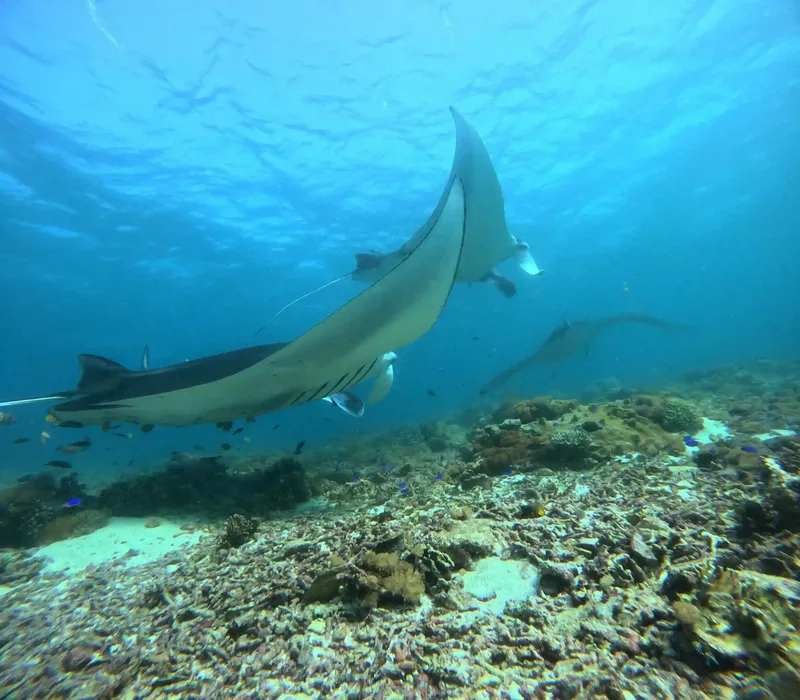
Komodo is one of Indonesia's most reliable places to swim with reef manta rays. At Manta Point, mantas queue over a shallow cleaning station while small wrasse pick them over — divers hold position low on the rubble and watch the animals circle back again and again. Because the action happens near the surface, snorkellers watching from above often get views just as good.
- When: mantas are present year-round, with notably strong sightings from December to February at some sites.
- How: your cruise director times the visit around the tide, when cleaning activity peaks.
- Honesty note: these are wild animals — frequently seen, conditions permitting, never guaranteed.
Sea Turtles: Guaranteed Crowd-Pleasers, Gently Met
Green and hawksbill turtles live throughout the park, grazing seagrass beds and resting on coral heads. The easiest place to meet them is Siaba Besar, a sheltered, gently sloping site where turtles are so relaxed they barely pause their feeding as you pass. It is a favourite first stop for beginners and snorkellers, and one of the reasons families rate our family and group charters so highly.
Sharks, Trevally and the Schooling North
White-tip and black-tip reef sharks patrol most Komodo reefs, and the park's northern pinnacles are where the food chain performs in the open. At Castle Rock and its neighbour Crystal Rock, walls of fusiliers and surgeonfish part around hunting giant trevally while sharks cruise the edges of the school. Closer to Labuan Bajo, Batu Bolong packs an entire ecosystem onto one current-swept pinnacle — many guides call it the fishiest single site they know.
These are current-fed sites, and that current is exactly why the fish are there. Guides brief carefully, choose the tide window and match each site to your experience level.
The Soft-Coral South: Macro and Rare Finds
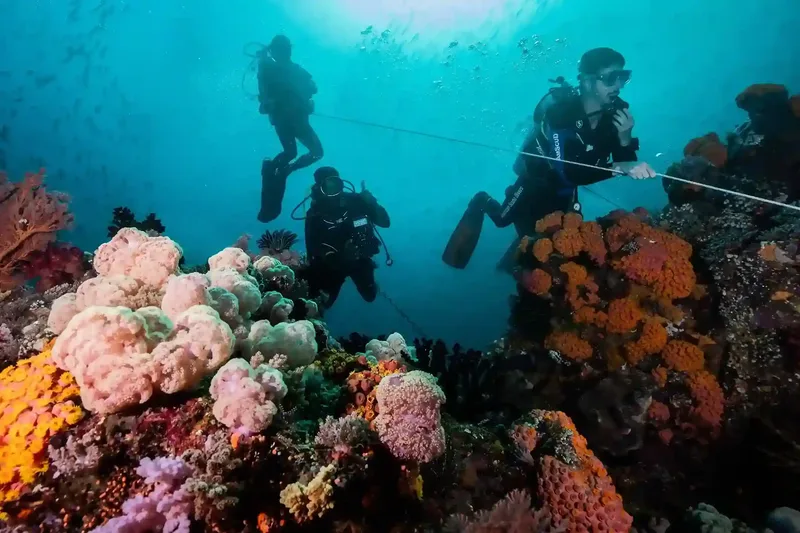
Cross to the park's south side and the water cools, the light softens and the reef changes character completely. Cannibal Rock, in Horseshoe Bay, is draped in soft corals, crinoids and sea apples, with nudibranchs, frogfish and other photographer's prizes hiding in the colour. Underwater photographers routinely rank it among Indonesia's best sites.
The south is at its finest in the April–September dry season, which is when longer itineraries schedule it. If macro life and dramatic soft coral are your priority, plan at least a 7-day liveaboard so the boat can reposition south without rushing.
What You Can See, Season by Season
Your route is weather-planned daily, which is one advantage of cruising with a single specialist operator: our own and partner fleet, operated to one standard with Komodo Luxury (Juara group), shares real-time site conditions across every boat.
- April–September (dry season): the all-round best window — calm seas, strong visibility, and access to the southern sites at their peak.
- December–February: notably strong manta sightings at some sites; north-side cruising continues comfortably.
- Year-round: turtles, reef sharks, schooling fish and healthy coral — the park never has an "off" season underwater, though conditions vary.
Frequently Asked Questions
Are manta ray sightings guaranteed at Manta Point?
Can snorkellers see mantas and turtles, or only divers?
When is the best season for marine life in Komodo?
Is it safe to swim with Komodo's sharks and currents?
Is Komodo good for underwater photography?
Snorkeller or Diver? You'll Both Be Busy
A large share of Komodo's marine life lives in the top ten metres, so snorkellers see mantas, turtles, reef sharks and the great fish schools without ever certifying. Divers add the pinnacles, the deeper cleaning stations and the southern macro sites. Our guide to diving versus snorkelling in Komodo breaks down which sites suit each, and dedicated divers should look at the 8-day Komodo diving cruise, built around three to four dives a day.
Above the waterline, the wildlife continues: thousands of flying foxes stream out of Kalong Island at sunset, and the rose-tinted sand of Pink Beach comes from crushed red coral fragments — the reef, visible from shore.
Plan Your Komodo Cruise
Share your dates, group size and interests — our specialists reply with matched boats, a day-by-day plan and a transparent quote.
WhatsApp: +62 811-3941-4563