Updated July 10, 2026
From Komodo Back to Bali by Sea: What to Expect on the Return Leg of a Luxury Cruise
The Komodo to Bali cruise route feels completely different to the outbound journey, even though you are sailing through many of the same islands. Westbound, the pace softens, the seas are often kinder, and the rhythm on board shifts from high‑energy exploration to a slow, scenic glide back toward Bali.
As someone who spends much of the dry season moving between Bali, Labuan Bajo and the island groups in between, I’m often asked, “What is the return leg actually like?” This guide walks you through the typical westbound itinerary, sea conditions, daily routine and how the final approach to Benoa Harbour unfolds on a luxury Bali–Komodo cruise.
If you want a full overview of the round‑trip experience, I also recommend reading our core guide: Bali to Komodo Cruise (Itinerary, Ports & Stops).
1. The Komodo to Bali Cruise Route in 2025–2026
The classic Komodo to Bali cruise route traces the same volcanic chain you sailed eastbound, just in reverse. For 2025–2026, most luxury itineraries follow this general arc:
- Start/embarkation: Labuan Bajo (Flores) or around Komodo National Park
- West via: islands in the Komodo, Sumbawa and Lombok seas
- Finish/disembarkation: Benoa Harbour (Tanjung Benoa), South Bali
On a 7‑night or 8‑night program, your westbound leg typically includes some mix of:
- Komodo National Park (Padar, Rinca or Komodo Island, pink‑sand beaches, manta sites)
- Volcanic Sumbawa (quiet bays, reef walls, traditional villages)
- Gili or Lombok area (depending on yacht, weather and timing)
- Southern Bali waters, entering the Benoa Peninsula from the east
There is no single “official” westbound track; each yacht owner and captain fine‑tunes the route to match weather, currents, tides and the style of the ship. Phinisi and small expedition yachts tend to keep a slightly more exploratory line, ducking into quiet bays. Larger motor yachts may cover more distance at night and focus on highlight anchorages.
Most of our own programs at Luxury Cruise from Bali to Komodo | Bali Komodo Luxury Cruise use a mix of classic Indonesian phinisi, small expedition yachts and modern motor yachts, operating mainly from April to September when the conditions between Komodo and Bali are at their friendliest.
2. Eastbound vs Westbound: How the Return Leg Feels Different
Sailing Bali–Komodo–Bali is not just “there and back again.” The westbound leg has its own character.
Pace and mood on board
- Outbound (Bali to Komodo): Guests are energised, ticking off bucket‑list moments – first snorkel, first glimpse of dragons, first sunrise at anchor.
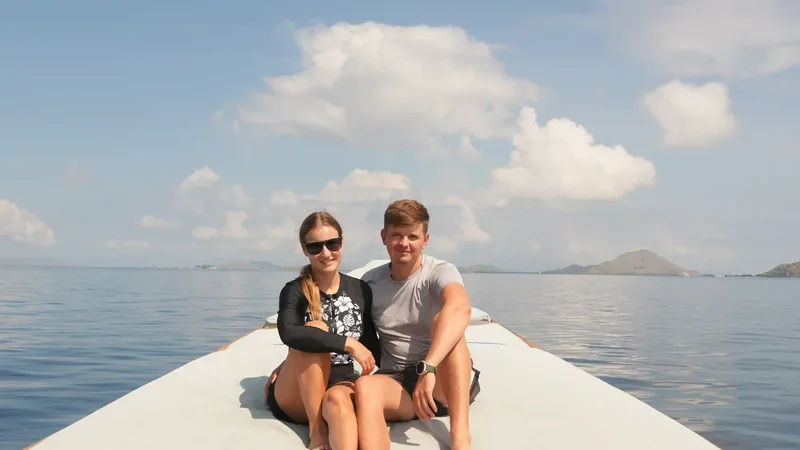
- Return (Komodo to Bali): The highlight checklist is usually complete. The mood softens: more sun deck time, longer meals, people swapping photos and stories.
By the time you turn back toward Bali, you know your crew by name, you have a favourite spot on the deck, and you’ve found your groove with the sea. The return leg becomes about being on the water rather than racing between experiences.
Sightseeing vs unwinding
Captains often front‑load the most active excursions on the eastbound days: dragon treks, big ridge hikes like Padar, and longer drift snorkels. On the Komodo to Bali cruise route, they usually:
- Keep the anchorages beautiful but easier to access
- Shift focus to snorkelling, beach time and kayaking over very long hikes
- Build in more open at‑sea time for reading, napping and spa treatments (if your yacht has them)
You are still exploring, but there’s more breathing space between adventures.
3. Sea Conditions: What the Westbound Leg Is Really Like
The big concern for many first‑time guests is, “Will the seas be rough on the way back?” The honest answer: the dry season, the Komodo to Bali cruise route is often calmer than people expect, but it is still open ocean.
Seasonality: why April–September matters
Most higher‑end operators time Bali–Komodo itineraries for the April–September dry season. During this window, the southeast trade winds are well‑established and the weather pattern is relatively predictable:
- More sunshine, lower rainfall across Bali, Lombok, Sumbawa and Flores
- Generally stable visibility for snorkelling and diving
- More consistent surface conditions than during the wet, squally months
Afternoons can still be breezy and you may encounter some chop in the channels, but this is the period skippers prefer for multi‑day Bali–Komodo crossings.
Typical sea states on the Komodo–Bali track
On the westbound leg, expect a mix of:
- Protected waters inside Komodo National Park, where the seas are usually manageable but the currents under the surface can be strong. This matters for snorkelling and diving more than for the ship’s motion.
- More open fetch between Komodo/Sumbawa and Lombok/Bali, where you may get low, rolling swell and some wind chop, especially in the afternoons.
- Calmer early mornings and evenings when many captains plan their longer passages, keeping the daytime focus on anchorages and excursions.
Most guests unaccustomed to boats are surprised how quickly they adapt. Your crew will offer the usual sea‑sickness remedies, and modern yachts and larger phinisi are generally stable, but if you are very sensitive, mention it when you book so your sailing dates and cabin placement can be chosen with that in mind.
For regional marine forecasts and background, the Indonesian Meteorology, Climatology and Geophysical Agency (BMKG) provides public information at bmkg.go.id.
4. A Typical Day Westbound: Life on Board as You Sail Back Toward Bali
Every yacht has its own style, but the rhythm on the Komodo to Bali cruise route is remarkably consistent. Here is how a “classic” westbound day can unfold.
Early morning: sunrises and quieter anchorages
- The ship may have moved in the night, arriving at a new bay around dawn.
- Light snacks and coffee appear on deck before a sunrise zodiac cruise, paddle or swim.
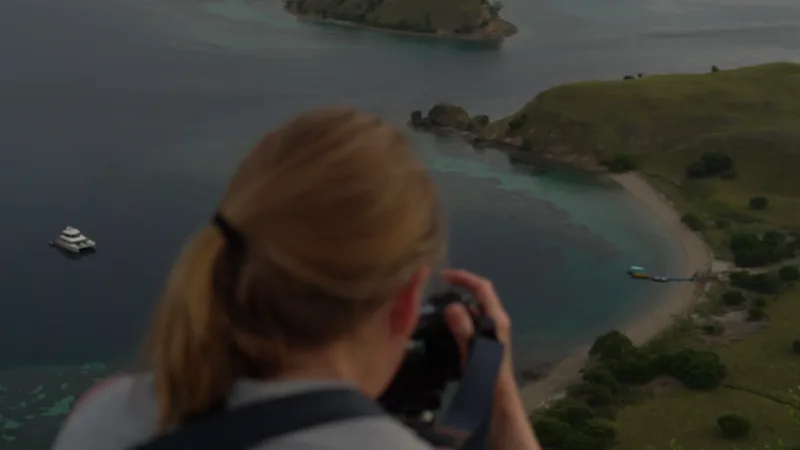
- Those who love photography use the soft light to capture volcanic silhouettes and orange‑lit ridges; others simply enjoy the stillness from the top deck.
Mid‑morning: snorkelling and relaxed excursions
- After a full breakfast, the crew sets up snorkelling, diving or village visits if they feature on your specific program.
- Sites at this stage of the trip often emphasise easy access reefs, coral gardens and sandy coves that don’t require long hikes.
- If there are remaining “big ticket” experiences – for example a final manta cleaning station – captains often place them here.
Midday: sailing time and long lunches
- By late morning or lunch, you are usually back on board and the ship begins a westward run toward the next island group.
- Lunch can stretch into an unhurried affair: fresh fish from local waters, Indonesian dishes, salads and fruit.
- Afterwards, guests scatter across the yacht: some to cabins, some to the bow or flybridge, some to the library or lounge.
Afternoon: sea days and slow transition
On days where the distance is longer – for example between Sumbawa and Lombok – you may spend much of the afternoon under way.
- The sea is usually livelier during this part of the day, but you are in the hands of a captain who runs this route each season.
- Onboard teams often schedule informal talks on the region’s marine life, volcanology, or local culture.
- This is also a good time for spa treatments, editing photos or simply dozing on a sun lounger.
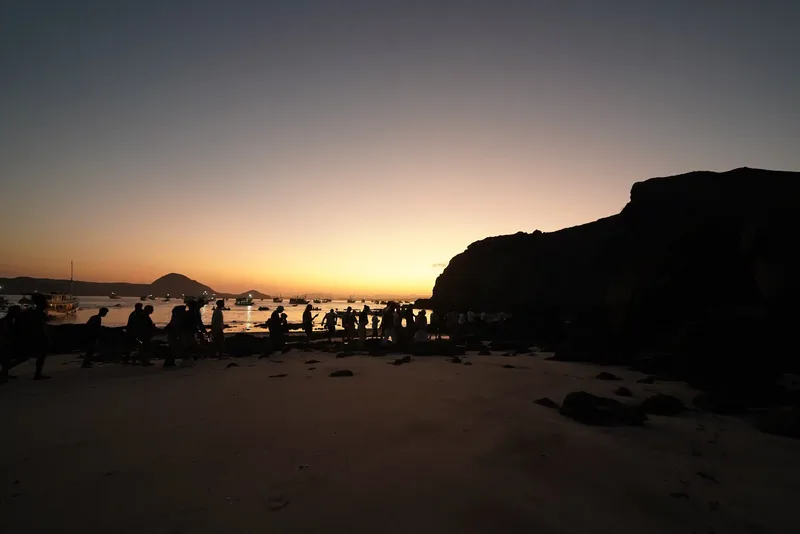
Sunset: golden‑hour sailing and social time
- Most westbound itineraries align so that at least some sunsets are watched under way, with Bali or Lombok slowly materialising on the horizon.
- Drinks and canapés are usually served; this naturally becomes the most social part of the day.
- On some nights the crew might organise a barbecue on deck or a farewell dinner as Bali draws closer.
Night: quiet crossings and stargazing
- Depending on distance and timing, your yacht may run part of the night.
- Light pollution is limited between major islands, so stargazing is excellent on clear dry‑season nights.
- For those who like the feel of motion, falling asleep as the ship hums westward is often a highlight of the return journey.
5. Approaching Bali: Final Day and Disembarkation at Benoa Harbour
For 2025–2026, the standard finish line for luxury Bali–Komodo itineraries is Benoa Harbour (Tanjung Benoa) in South Bali – the same port that serves as the main departure point.
What the final sailing hours are like
- On the final night, your captain may time the passage so that Bali’s outline appears at dawn, or you wake up already at anchor off the Benoa Peninsula.
- As you near South Bali, you will see Nusa Dua, Sanur and the Bukit cliffs in the distance, plus traffic from other yachts and cruise ships.
- The sea state here is usually manageable, but you are back in busier waters, so there is more traffic and activity than around Komodo.
Disembarkation logistics at Port of Benoa
Benoa is Bali’s principal cruise gateway, handling both large international ships and smaller luxury vessels. Onboard, the final morning is typically structured around a relaxed breakfast and smooth transfers:
- Disembarkation point: cruise jetty or marina area within the Port of Benoa / Tanjung Benoa complex.
- Transfer time to Ngurah Rai International Airport (DPS): usually around 30–45 minutes by private car in normal daytime traffic; the distance is roughly 12–15 km depending on the route.
- Transfer to South Bali hotels (Nusa Dua, Sanur, Kuta, Jimbaran, Seminyak): also commonly 30–60 minutes by private car, with traffic and time of day being the main variables.
Most luxury cruise programs include, or can easily arrange, private car transfers from the port to your hotel or the airport. It is helpful to share your flight details in advance so your final day at sea can be paced accordingly.
For background on passenger handling and cruise traffic at Benoa, you can refer to information from the port owner, Pelindo, at pelindo.co.id.
6. Choosing Your Ideal Westbound Experience: Phinisi, Expedition Yacht or Motor Yacht
The Komodo to Bali cruise route feels slightly different depending on which type of vessel you choose for your 2025–2026 sailing.
Traditional phinisi
- Atmosphere: classic wooden Indonesian lines, sails up when conditions allow, very strong sense of place.
- Rhythm: generally slower cruising speeds; itineraries may include more night passages so you can enjoy anchorages in daylight.
- Best suited for: guests who enjoy the romance of traditional shipbuilding and do not mind a little more motion from time to time.
Small expedition yachts
- Atmosphere: purpose‑built for longer voyages, typically with strong stabilisation, lounges and multiple decks.
- Rhythm: balanced; able to cover distances efficiently while keeping plenty of daytime activity at anchor.
- Best suited for: guests who like structured guiding, lectures, and a mix of comfort and exploration.
Luxury motor yachts
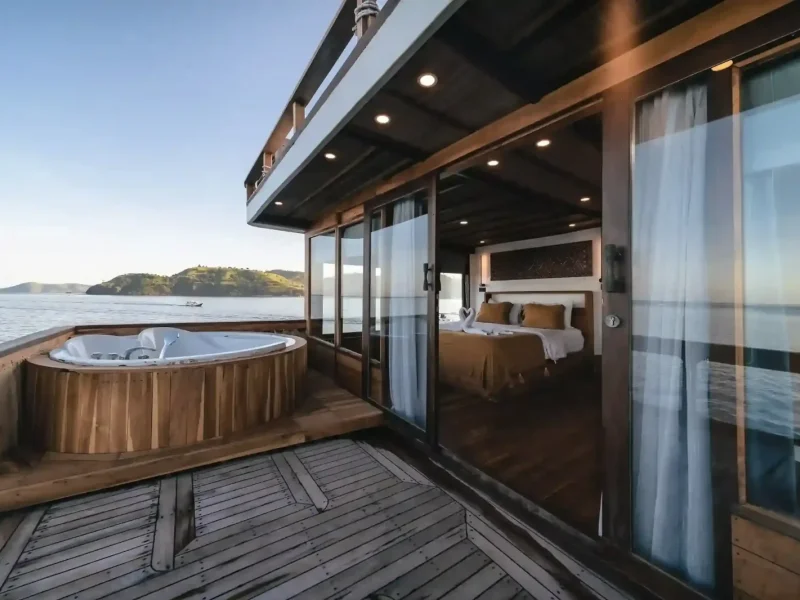
- Atmosphere: modern, sleek, and often designed with maximum comfort and service in mind.
- Rhythm: faster transit times; captains have more flexibility to dodge chop by adjusting routes and timing.
- Best suited for: guests who prioritise privacy, speed and resort‑style amenities on the water.
On all three, the essence of the westbound cruise is similar: a gentle unwind as you cross from the wildness of Komodo back toward the soft lights of Bali.
7. How to Prepare for the Return Leg: Practical Tips
To make the most of your Komodo–Bali days, a little preparation goes a long way. Here is a concise checklist.
Packing for comfort and changing conditions
- Light layers: the sun is strong, but evenings on deck can feel cool when the wind is up.
- Sun protection: hat, sunglasses, reef‑safe sunscreen, long‑sleeve swim tops for snorkelling.
- Footwear: sandals or deck shoes on board; easy‑on shoes for short walks ashore.
- Sea‑comfort kit: any personal motion‑sickness remedies you prefer, even if you rarely need them.
Planning around flights and onward travel
- Allow a comfortable buffer between scheduled disembarkation at Benoa and international flights from DPS; we generally suggest a late‑afternoon or evening departure if you are flying long‑haul the same day.
- Some guests prefer one extra night in South Bali after the cruise to decompress before long flights.
- If you have a tight schedule, communicate it during the planning phase so the itinerary and final‑day transfers can be aligned.
The westbound Komodo to Bali cruise route is where a high‑energy exploration quietly turns into a moving lounge with volcanic views, soft tradewinds and time to absorb everything you have just seen. It is less about collecting new highlights and more about letting the entire journey sink in as the islands slip by.
To plan your own Bali–Komodo–Bali experience, or a one‑way itinerary finishing at Benoa Harbour, speak with our team via WhatsApp at +62 811-3941-4563 or send an enquiry with the code . We will help you choose the right yacht, dates and Komodo–Bali routing for the way you like to travel.