Updated July 4, 2026
Padar Island hike guide from Bali cruise
Padar Island hike guide from Bali cruise planners usually focus on the postcard viewpoint – but guests often arrive with questions: How hard is the trail? Which shoes? Sunrise or sunset? As someone who regularly plans Bali–Komodo luxury itineraries, I’ll walk you through exactly what to expect in 2025–2026.
If you’re still comparing routes and ships, start with our core overview here: Bali to Komodo Cruise (Itinerary, Ports & Stops). Below, we’ll zoom in specifically on Padar: access from Bali, the hike, timing, and photography strategies tailored to a luxury yacht schedule.
Getting to Padar Island from Bali: cruise logistics that matter
For 2025–2026, almost all high‑end Bali–Komodo programs, including ours, depart from Benoa Harbour (Tanjung Benoa) in South Bali. This is Bali’s main cruise port at the end of the Benoa Peninsula, near Nusa Dua, Sanur, Kuta, and Denpasar.
Typical flow:
- Arrival in Bali (DPS) – You land at Ngurah Rai International Airport, about 12–15 km from Benoa Harbour. With normal traffic, we plan around 30–45 minutes by private car to the port.
- Transfer to the yacht – Guests are met at the airport or their South Bali hotel and driven directly to the Benoa cruise terminal or yacht marina for check‑in and safety briefing.
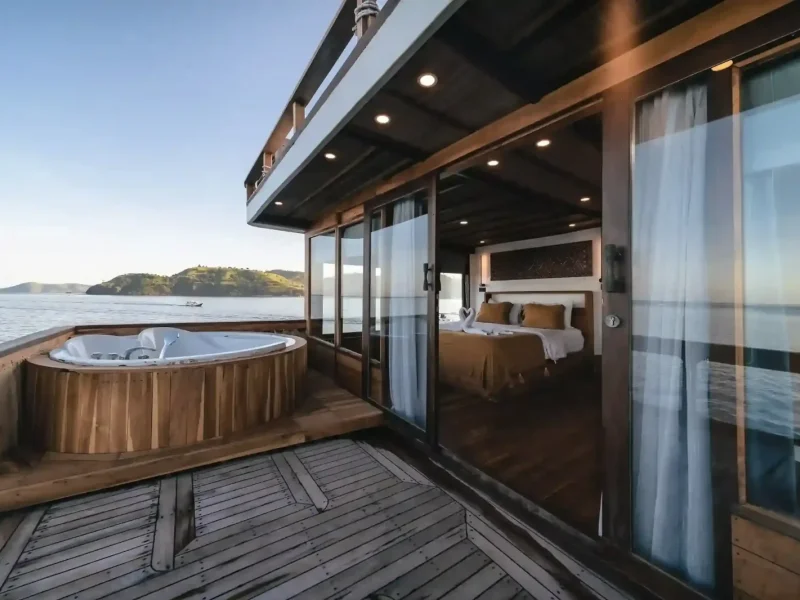
- Vessel types – Luxury Komodo itineraries in this period use a mix of:
- Traditional phinisi (hand‑built wooden sailing yachts with modern interiors)
- Small expedition yachts
- Luxury motor yachts for private charters or per‑cabin departures
- Seasonality – Most operators time their Bali–Komodo cruises for the April–September dry season, when seas are generally calmer and Padar’s viewpoints are clearest.
Padar is typically reached after you’ve crossed to the Komodo National Park area, often day 3 or 4 of a 7‑night Bali–Komodo cruise, depending on the exact routing. We outline sample timelines here: Bali to Komodo Cruise (Itinerary, Ports & Stops).
What the Padar Island hike is really like
Padar’s main hike is short but hot. Guests are frequently surprised by how manageable the distance is – and how much the heat and humidity amplify the effort.
Trail overview
- Starting point: Beach landing on the north side of Padar (tender or dinghy from the yacht).
- Trail type: A combination of stone steps and dirt paths up a ridgeline.
- Time to main viewpoint: Approximately 20–40 minutes up, 15–30 minutes down, depending on pace and stops.
- Distance: Roughly 1.5–2 km round‑trip, but mostly uphill on the way out.
- Heat factor: Minimal shade; the sun reflects off the dry hills in season. Hydration and timing are crucial.
Fitness level: who can comfortably do the Padar hike?
In my experience, the Padar Island hike is accessible for most guests with moderate fitness who are comfortable with stairs and uphill walking in warm conditions.
You’ll likely be fine if you:
- Are comfortable climbing several flights of stairs at home without needing long rests
- Can walk 3–4 km on uneven terrain
- Don’t have major knee, hip, or serious cardiac issues
We usually brief guests with:
- At your own pace – You can stop at intermediate viewpoints; you don’t have to reach the highest ridge if it feels too much.
- Support from the cruise team – Guides encourage breaks, help choose safe foot placement, and carry extra water.
- Option to stay aboard – If you prefer, you can remain on the yacht or enjoy a shorter beach walk and photograph Padar from below.
Footwear and packing checklist for Padar
I always advise guests to pack a small “Padar kit” in their cabin:
- Trail shoes or sports trainers with grip (no flip‑flops for the hike)
- Lightweight, breathable clothing (sports T‑shirt or long‑sleeve, quick‑dry shorts)
- Cap or wide‑brim hat + sunglasses
- Small daypack – to carry camera gear, water, light layer
- Refillable water bottle – usually provided on board
- Sunscreen (already applied on the yacht and topped up at the trailhead)
When to hike Padar: sunrise vs. early morning vs. sunset
Padar Island hike guide from Bali cruise itineraries almost always prioritise earlier or later in the day to avoid the harshest sun. The “right” time also depends on your photography goals.
Sunrise hike
Pros:
- Softer light, pastel colours, and long shadows along Padar’s ridges
- Cooler temperatures for the uphill walk
- Fewer boats and people in the background of your photos
Cons:
- Very early wake‑up (often 04:00–04:30 on the yacht)
- Need to climb some or all of the trail in dim or pre‑dawn light (guides use headlamps)
Early–mid morning hike
This is the most common timing on luxury cruises.
- Start: Around 06:00–07:00 at the trailhead
- Advantages: Still relatively cool; you get golden morning light but avoid the pitch‑dark start of a pure sunrise attempt.
- Photography: Good for those three‑bay panoramas with decent light on the water and hills.
Late afternoon / sunset hike
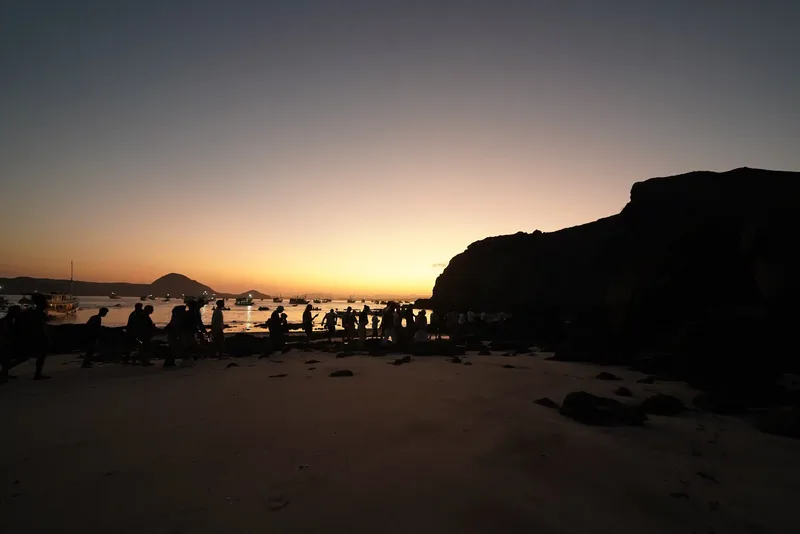
- Pros: Warm, directional light, excellent for dramatic contrast and silhouettes; pleasant temperature on the way up.
- Cons: Descent can be in low light; the trail is still doable but you’ll be glad for a headlamp or phone torch.
From a route‑planning point of view, your Padar slot is usually coordinated with Komodo dragon trekking and snorkelling stops. On a Bali–Komodo–Labuan Bajo route, you’ll often see something like:
- Morning Padar hike, midday snorkel, afternoon beach time, or
- Afternoon Padar hike after a morning dragon trek on Komodo or Rinca
We fine‑tune this on each departure to match tides, park quotas, and the overall weekly flow. If you want Padar at a specific time of day, it’s best to flag this when you discuss dates and vessel options: Luxury Cruise from Bali to Komodo | Bali Komodo Luxury Cruise.
Photography guide: how to frame Padar’s famous curves
Padar Island hike guide from Bali cruise guests nearly always includes one promise: you will take more photos than you expect. The key is knowing how to move along the ridge and use the light rather than just stopping at the first crowded viewpoint.
Essential gear (without overpacking)
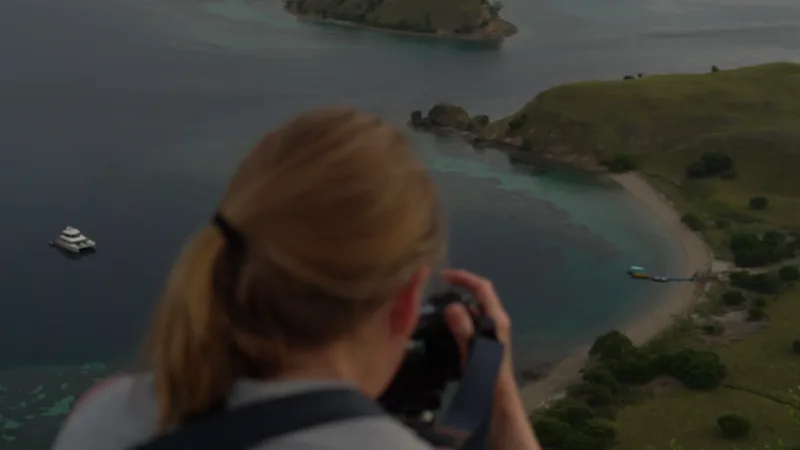
- Phone camera – Modern phones do well on Padar, especially with wide‑angle lenses.
- Mirrorless or DSLR – If you enjoy photography, bring:
- Wide‑angle (around 16–24mm full‑frame) for the sweeping three‑bay shot
- Standard zoom (24–70mm or 24–105mm) to isolate individual bays or boats
- No heavy tripod needed – The hike is short, but you’ll appreciate travelling light. A compact travel tripod is useful only if you’re specifically chasing low‑light landscapes.
Classic vantage points along the trail
- Lower terrace – Great if your group has mixed fitness levels. You already see two bays and ridges; ideal for family or couple portraits with less climbing.
- Main midpoint viewpoint – Most of the iconic Padar images are from this section:
- Face slightly north‑east to capture the three distinct bays and sandbars.
- Use a wide‑angle lens for the full curve of the ridgeline.
- Upper ridge – Fewer people; better for layered, more dramatic compositions:
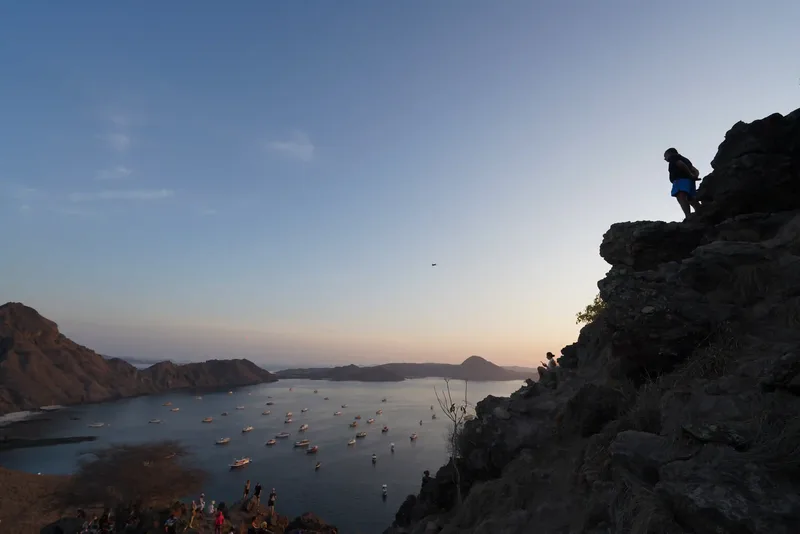
- Shoot back toward the lower ridge to include the “ant trail” of hikers for a scale reference.
- Turn around to capture more open ocean and the shapes of neighbouring islands.
Light and composition tips
- Shoot towards but not into the sun – Angle your frame so the sun sits just outside your shot, giving you rim light on the hills and boats.
- Use people for scale – A person on a nearby ridge makes the landscape look vast without losing intimacy.
- Polarising filter – If you’re shooting with a dedicated camera, a polariser can deepen the blues of the bays and cut glare off the water.
- Bracketing for dynamic range – The contrast between bright sky and darker ridges can be high. Use HDR mode on your phone or bracket exposures on a camera.
For general national park information, regulations, and conservation updates that may affect photography and drone use, check the official Komodo National Park page via Indonesia’s Ministry of Environment and Forestry or the UNESCO site: Komodo National Park – UNESCO World Heritage Centre.
Weather, seasons, and what changes between April and September
Your Padar experience will vary with the season, even within the dry months.
Landscape colours
- April–May – Hills often retain a hint of green from the tail‑end of wet season; bays are vivid, skies can have more cloud texture.
- June–August – Slopes dry to golden‑brown; classic “savanna” look that photographs beautifully in low‑angle light.
- September – Typically driest; vegetation is sparse, but clarity can be exceptional on some days.
Sea and sky conditions
- Wind and swell – Can pick up in July–August in parts of the route; high‑end yachts manage this by adjusting timing and anchorage selection.
- Visibility – Often good for distant ridgelines; haze can appear with heat, but sunrise and early morning usually cut through this.
We continually monitor forecasts and coordinate with park authorities for the latest conditions and any temporary restrictions. For broader Komodo travel advisories, Indonesia’s official tourism site is a useful reference alongside your cruise operator’s updates.
How Padar fits into a full Bali–Komodo luxury itinerary
Seeing Padar in context helps you pace your energy and expectations. On a typical 7‑night Bali–Komodo cruise using a phinisi or expedition yacht, Padar sits among a mix of trekking, snorkelling, and relaxed beach stops.
A simplified rhythm might be:
- Days 1–2: Sail from Benoa Harbour eastwards, with coastal stops in Lombok or Sumbawa, snorkelling and village visits.
- Days 3–5: Core Komodo National Park days – Padar hike, Komodo or Rinca dragon trekking, manta and reef snorkelling, sandbar picnics.
- Days 6–7: Additional islands and snorkel sites near Labuan Bajo or along the return leg, depending on whether your itinerary ends in Bali or Flores.
This staggered structure means:
- You’re not going from a long open‑sea day straight into your hike; you’ll have adjusted to ship life and climate.
- The crew can time Padar after a restful night at anchor nearby for a calm tender ride and cooler start.
We go into more depth on sample routes, port options (including Labuan Bajo), and vessel styles here: Luxury Cruise from Bali to Komodo | Bali Komodo Luxury Cruise.
Final planning notes – and how we can tailor Padar for you
To make the most of Padar, here is the condensed checklist I use when planning with guests:
- Confirm your season: Aim for April–September for the driest conditions and clearest ridgeline views.
- Discuss timing preferences: Tell us if you prioritise sunrise, soft morning light, or late‑afternoon drama.
- Share fitness or mobility details early: We can pace the hike, arrange more frequent rest points, or suggest alternative viewpoints if full ascent isn’t ideal.
- Prepare light, proper footwear and sun protection: The hike is short, but conditions are exposed.
- Think through photography in advance: Decide if a phone is enough or if you want a dedicated camera and lens; this influences packing and how you move along the ridge.
If Padar is high on your wish‑list and you want it integrated smoothly into a wider Bali–Komodo route – with the right yacht style, cabin type, and season – contact our planning team. We’ll walk you through dates, vessel options (phinisi, small expedition, or motor yacht), and how Padar fits alongside dragons, manta rays, and quiet anchorages.
To start planning: message us on WhatsApp at +62 811-3941-4563 or send your trip outline with the subject . We’ll help build a Bali–Komodo cruise where your Padar Island hike feels challenging in the right way – and photogenic from the first step off the tender.