
Updated July 4, 2026
Seasickness on Bali to Komodo Cruise: Routes, Seasons, and Practical Ways to Minimise Motion
Seasickness on Bali to Komodo cruise itineraries is one of the first questions I’m asked by guests who love the idea of a luxury yacht, but hate the idea of feeling queasy for days. The good news: with the right ship, the right season, and a few simple habits, seasickness is usually manageable, and often avoidable.
In this guide I’ll walk you through how sea conditions actually feel between Bali and Komodo, which parts of the route are typically the “bumpiest”, how seasons affect motion, and what we do in practice on our Luxury Cruise from Bali to Komodo | Bali Komodo Luxury Cruise to keep sensitive guests comfortable.
1. The Bali–Komodo Route: Where Motion Is Strongest
Almost all luxury Bali–Komodo itineraries for 2025–2026 begin at Benoa Harbour (Tanjung Benoa) in South Bali and finish in Labuan Bajo (Flores), gateway to Komodo National Park. Within that big arc, the “character” of the sea changes a few times.
Typical segments and how they feel
- Benoa Harbour to Lombok Strait
Departing from the Port of Benoa, the first hours usually feel moderate: this is coastal water, and we can often hug the south or east of Bali or head toward Nusa Penida before crossing towards Lombok. You may feel a gentle to moderate roll, but most guests still happily walk around with a coffee. - Lombok Strait (between Bali and Lombok)
This is one of the key “motion zones”. The Lombok Strait is a deep channel where strong currents flow between the Indian Ocean and the Flores Sea. Swell and current can stack up here, especially during spring tides or when trade winds pick up. If you are motion‑sensitive, this is where you’ll most feel the ship move. - Sumbawa coastal cruising
Once past Lombok, many itineraries track along the north coast of Sumbawa. Seas are generally more settled here, especially when we cruise near shore or between islands. This segment often feels smoother than guests expect from “open sea”. - Approach to Komodo and Labuan Bajo
As we enter the island‑sheltered waters around Komodo, Padar, Rinca, and on to Labuan Bajo, the sea state usually calms significantly. The park itself is protected by a maze of islands; where you still feel motion, it’s more often from tidal current than large swell.
If you read our sample day‑by‑day on the Bali to Komodo Cruise (Itinerary, Ports & Stops) page, you’ll see that the longest open‑water transits are usually scheduled at night, when most guests are lying flat (which naturally reduces seasickness).
2. Seasonality: When Is the Sea Generally Calmer?
Most high‑end Bali–Komodo sailings are timed for the April–September dry season. There are several reasons, but comfort in the water and on the yacht is a big one.
Dry season (roughly April–September)
- Prevailing winds: Southeast trade winds, more predictable than in wet season.
- Sea state: Typically moderate around the Lombok Strait, calmer inside Komodo National Park. Shorter, more regular waves are usually easier on the stomach than long, confused swell.
- Visibility & activities: Clearer skies, drier air, and good underwater visibility, which means fewer cruise interruptions and more flexibility to pick the smoothest windows for crossings.
Shoulder and wet season (October–March)
- Changing wind patterns: Transitioning or full northwest monsoon. That can mean occasional squalls and more unpredictable seas, particularly in January–February.
- Sea state: Some days are glassy; others can be more lumpy in exposed channels. A careful captain can still choose calmer timings, but your risk of a “bouncy day” is slightly higher.
If seasickness is a major concern, I strongly recommend choosing a departure in the cooler, drier part of the year and confirming with your operator that the primary route is Bali–Lombok–Sumbawa–Komodo, rather than more exposed southern detours.
3. How Yacht Type and Stabilisation Affect Motion
For 2025–2026, luxury Bali–Komodo programs primarily use three categories of vessels: traditional phinisi, small expedition yachts, and luxury motor yachts. Each behaves a little differently in the water.
Traditional phinisi
These Indonesian wooden sailing yachts have deep hulls and a graceful roll. On the plus side, they often feel “soft” in gentle seas. On the minus side, they can roll more slowly and noticeably in beam swell (waves from the side). Good phinisi refits add ballast and sometimes active or passive stabilisers to tame that motion.
Small expedition yachts
Steel‑hulled expedition yachts (such as vessels in the Aqua Blu class) are designed exactly for itineraries like Bali–Komodo. They typically offer:
- Higher tonnage and more mass (they resist quick movement).
- Stabilisers, either fins or gyros, to counteract roll in open water.
- More deck and cabin options mid‑ship where motion is minimal.
Luxury motor yachts
Modern motor yachts combine speed and stabilisation. The ability to adjust speed and course to “ride” with the swell, rather than across it, is very useful in the Lombok and Sape Straits. Many have at‑anchor stabilisers as well, which keep the yacht more level even when moored in a tidal channel.
When you contact us for a proposed yacht or shared departure on our Luxury Cruise from Bali to Komodo | Bali Komodo Luxury Cruise, tell us upfront that motion is a concern. I can then prioritise vessels with modern stabilisation systems and proven smooth performance on this specific route.
4. Choosing the Right Cabin to Reduce Seasickness
Cabin location makes a noticeable difference. A few metres can mean the difference between gentle swaying and a circus ride.
Best cabin positions
- Mid‑ship, low deck: The centre of the yacht, close to the waterline, is the natural pivot point. There is less vertical and side‑to‑side movement here, which is ideal for sensitive guests.
- Avoid extreme bow and stern: Cabins all the way forward or all the way aft tend to move more as the yacht pitches over waves.
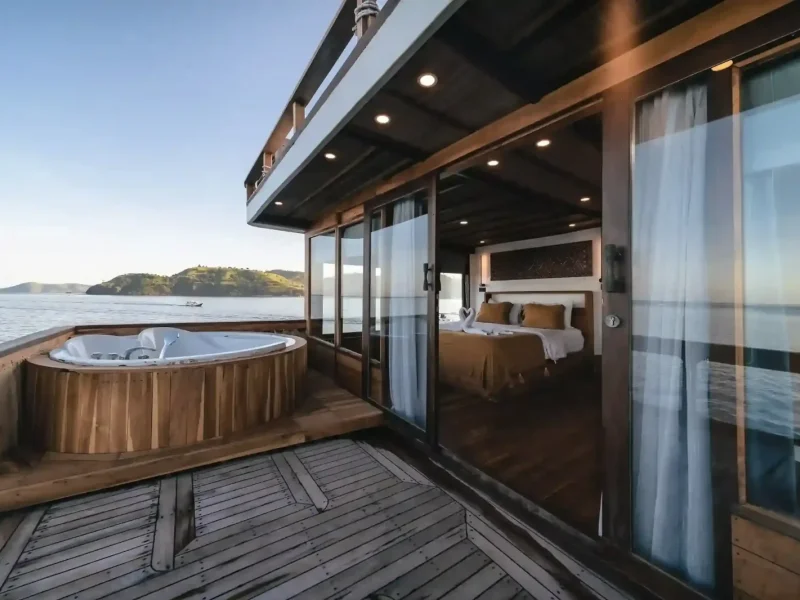
- Balance view vs. motion: Higher‑deck suites have dramatic views but also amplify the sensation of movement. If you know you’re prone to seasickness, a mid‑ship main‑deck suite often beats the top‑deck panorama.
On some yachts I can also assign you a cabin on the port or starboard side based on the most exposed direction of swell for your dates, but the mid‑ship location is always the main priority.
5. Practical Habits and Remedies that Actually Help
Medication is only one piece of the picture. How you eat, sleep, and move on board has a huge impact on seasickness on Bali to Komodo cruise journeys.
Before you board in Benoa
- Sleep well the night before: Fatigue amplifies motion sensitivity.
- Keep the transfer light: It takes about 30–45 minutes by private car from Ngurah Rai International Airport to Benoa Harbour. Ask your driver to keep the car cool and smooth; arriving already “car‑sick” is not ideal.
- Start preventatively: If you use medication such as meclizine or scopolamine (prescribed by your doctor), take it at least 1–2 hours before we sail, not after you start to feel bad.
On board: behaviour that reduces motion sickness
- Stay on deck and look at the horizon: Your inner ear and eyes sync better when you’re outside with a fixed visual reference. Reading in bed during a crossing is a classic trigger.
- Lie flat during longer crossings: Your body senses less movement when you’re horizontal, which is why overnight passages often feel easier.
- Fresh air over air‑conditioning: Cool sea breeze clears nausea much faster than recycled air.
- Gentle movement helps: Light walking or stretching can settle your equilibrium more than rigidly sitting still.
Food and drink strategies
- Light, frequent meals: An empty stomach worsens nausea, but so does a heavy, greasy lunch. Simple carbs, fruit, crackers, ginger tea, and clear soups are your friends.
- Hydrate, but avoid heavy alcohol: Modest alcohol with dinner is usually fine, but strong drinks plus swell is a bad combination.
- Limit very strong coffee during crossings: Caffeine can increase jitters and acid reflux, both of which feel worse when the floor moves.
Non‑pharmaceutical aids
- Ginger: Candied ginger, ginger tea, or ginger tablets help many people. There is clinical research suggesting ginger can reduce nausea in motion sickness.
- Acupressure bands: Wristbands that press on the P6 point (inner wrist) are low‑risk and help some guests enough to be worth trying.
- Breathing: Slow, deep breathing through your nose and longer exhales can calm the nervous system when you feel a wave of nausea begin.
Medication options (discuss with your doctor)
Reference resources such as the CDC’s traveler guidance on motion sickness are useful starting points. Two quick links:
- CDC – Motion Sickness (travelers’ health)
- NHS – Travel Sickness overview
Typical approaches your doctor might suggest include:
- Antihistamines: e.g. meclizine or dimenhydrinate, often taken 1 hour before sailing.
- Scopolamine patches: placed behind the ear several hours before departure for those with a history of severe motion sickness.
Always test a medication on land first; drowsiness can be as limiting as nausea if you’re not prepared for it.
6. How We Plan Itineraries for Motion‑Sensitive Guests
On our Bali–Komodo programs we work with captains who know this route intimately. That local experience is one of the biggest “anti‑seasickness” factors on your trip.
Routing and timing decisions
- Night crossings for exposed channels: Long hops across the Lombok or Sape Straits are often scheduled when guests are sleeping.
- Weather‑window flexibility: Within reason, we can swap the order of some stops to cross open water during a calmer window.
- Island‑hugging options: Where conditions allow, we cruise in the lee of islands rather than out in fully exposed sea.
On‑board communication
- Briefings before “bumpier” legs: We’ll usually tell you when to expect more motion so you can time medication and meals.
- Cabin adjustments: On smaller yachts, if we’re not full, we can sometimes move a very sensitive guest into a more central cabin for the longest crossings.
The goal is simple: you remember manta rays at Makassar Reef, dragons on Rinca, and sunrise over Padar – not a queasy stomach in the Lombok Strait.
7. When to Rethink or Customise Your Cruise
There are cases where a standard Bali–Komodo crossing may not be ideal, and we can adapt the trip instead.
- History of extreme motion sickness: If you’ve been ill on large cruise ships or even on catamarans in mild seas, consider:
- Flying to Labuan Bajo and doing a shorter, Komodo‑only yacht charter inside the park (seas are usually calmer and distances shorter).
- Selecting a heavier expedition yacht with strong stabilisation.
- Travel with very young children: Many families do fine, but if your children are under 3 and have no sea experience, think about limiting long open‑water legs.
If you’re unsure, send us a brief history of how you’ve handled previous boat trips when you enquire for a Bali to Komodo Cruise (Itinerary, Ports & Stops). We can then recommend a vessel, season, and route that fit your comfort level.
Plan a Bali–Komodo Cruise That Works for Your Stomach
Seasickness on Bali to Komodo cruise itineraries is something to respect, not fear. With careful timing from Benoa, a stabilised yacht, a sensible cabin choice, and a few simple habits and remedies, most guests who describe themselves as “very prone to motion sickness” still enjoy the crossing – and often tell me they felt far better than expected.
If you’d like help choosing the smoothest possible dates, yachts, and routes for your group, contact us directly via WhatsApp at +62 811-3941-4563 or send an enquiry with the subject line . Let’s design a Bali–Komodo journey that keeps your focus on the islands, not the waves.