Updated July 4, 2026
Pink Beach Komodo Luxury Cruise Guide
Pink Beach Komodo luxury cruise guide guests usually arrive by tender, step straight onto pale rosy sand, and slip into clear water over living coral gardens. Done right, it’s one of the highlights of a Bali–Komodo itinerary; done poorly, it can mean crowds, damaged reef, and a rushed photo stop.
As a cruise planner and guide for Bali–Komodo itineraries, I’m often asked how to experience Pink Beach in the most comfortable, low‑impact way. This Pink Beach Komodo luxury cruise guide focuses on timing, snorkelling, crowd avoidance, and conservation – so your visit leaves footprints in the sand, not scars on the reef.
Where Pink Beach Fits into a Bali–Komodo Luxury Itinerary
For 2025–2026, most high‑end Bali–Komodo cruises depart from Benoa Harbour (Tanjung Benoa) in South Bali, then cross the Flores Sea toward Labuan Bajo and Komodo National Park. Pink Beach – often called “Pantai Merah” – typically appears in the central section of a 6–8 night route.
- Departure point: Benoa Harbour, near Nusa Dua, Sanur, Kuta, and Denpasar. Guests are normally collected by private car from Ngurah Rai International Airport or South Bali hotels (around 30–45 minutes’ drive in typical traffic).
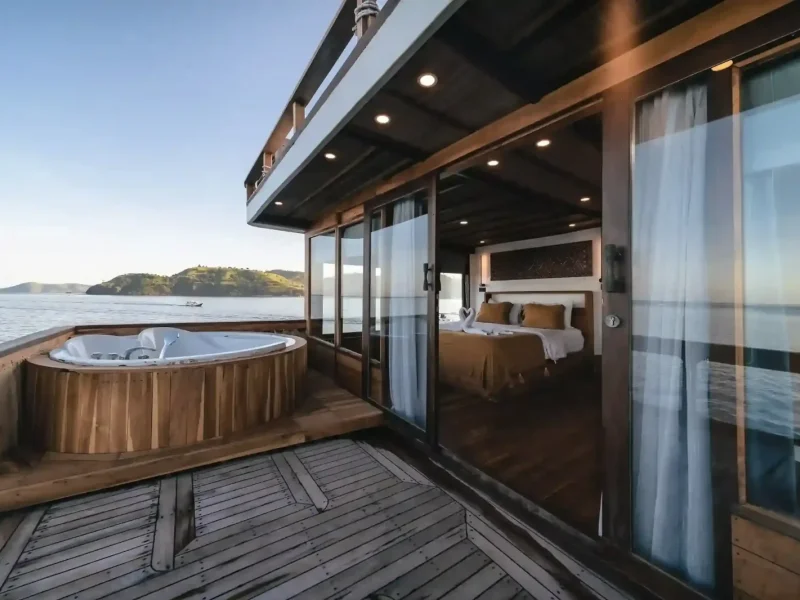
- Vessel styles: Traditional phinisi yachts, small expedition ships, and modern motor yachts, offered as full‑boat charters or per‑cabin sailings.
- Typical season: The April–September dry season, when seas tend to be calmer and visibility in Komodo’s bays usually improves.
For context on how Pink Beach sits among other park highlights such as Padar, Manta Point and Komodo or Rinca dragon walks, see our detailed route overview here: Bali to Komodo Cruise (Itinerary, Ports & Stops).
Why Pink Beach Is Pink – and Why It’s So Fragile
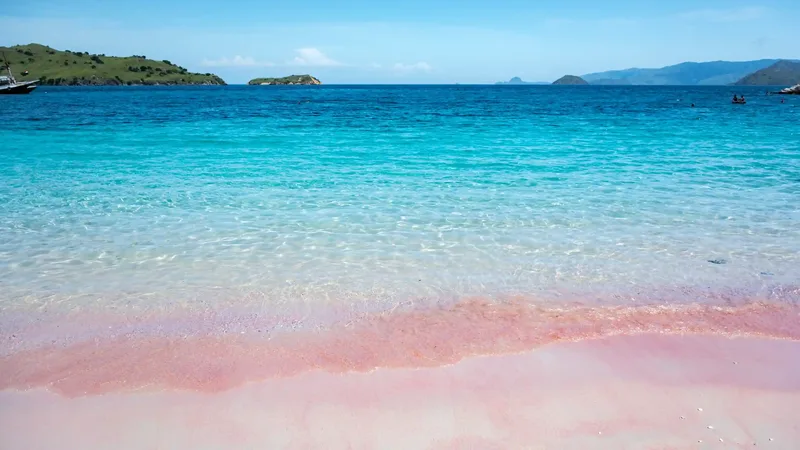
The colour that gives Pink Beach its name comes from tiny fragments of red foraminifera and coral mixed with white sand. When sunlight hits at the right angle, especially in the late afternoon, the shoreline turns a distinct rose hue.
That colour depends directly on healthy reef and coralline growth offshore. If corals are broken, trampled, or smothered by sediment, the source material declines and the beach gradually loses its famous tint. That’s why responsible visiting matters as much as any photo you’ll take.
Key points for guests:
- The “pink” is natural, but not guaranteed. Weather, tides, and cloud cover can make the sand look pale beige at midday, or warmer pink around golden hour. Don’t expect neon; think soft blush.
- Shoreline is narrow and can feel busy fast. Even a handful of boats can make a small cove feel crowded, especially when everyone clusters at the same sand spit.
- Reef is shallow and highly exposed to damage. A single fin kick on branching coral or standing on a bommie can undo years of growth.
Timing Your Visit: How to Avoid the Crowds
Pink Beach visits are shaped by tides, light, and park traffic. Here’s how luxury operators often schedule landings, and how you can nudge your cruise plan for more space.
1. Aim for Shoulder Windows, Not Peak Midday
The busiest time at Pink Beach is usually late morning to early afternoon, when day boats from Labuan Bajo overlap with safari liveaboards and small cruise ships.
- Quieter ranges: Roughly 08:00–09:30 and 15:30–17:00, depending on season and tide.
- Photography trade‑off: Midday light is harsh but good for bright water; late afternoon tends to give gentler colours and a stronger pink hue on the sand.
If you’re designing a tailor‑made charter along our standard route, request Pink Beach during either an early snorkel stop or pre‑sunset swim, then anchor overnight elsewhere. Our sample schedules on Luxury Cruise from Bali to Komodo | Bali Komodo Luxury Cruise show how we balance these windows with dragon walks and manta sites.
2. Use Your Tender Flexibly
Smaller luxury yachts have an advantage: we can watch how many boats are moving in and out of the bay and time tender launches for gaps. If a large group lands, a captain may:
- Shift to a nearby snorkel site for an hour, then return when the main crowd departs.
- Drop guests slightly further along the beach, if regulations and swell conditions permit, to spread people out.
Ask your cruise director onboard how they usually handle Pink Beach timing and whether they can keep your group slightly offset from ship‑based day tours.
Snorkelling at Pink Beach: What to Expect
Pink Beach is known as a relaxed, colourful snorkel rather than a high‑adrenaline drift dive. Conditions are still oceanic – this is Komodo – so we treat the site with respect.
Typical Conditions
- Depths: Coral starts in knee‑ to waist‑deep water, dropping off gently to 5–10 m close to shore, then deeper further out.
- Currents: Often mild close to the beach, but they can run strongly offshore or along the reef, especially on spring tides and around new/full moons.
- Visibility: Frequently clear but can be reduced after rain or strong wind. Dry‑season cruises (April–September) generally enjoy more consistent clarity.
Marine Life Highlights
Without inventing species lists, it’s fair to say guests commonly see:
- Colourful reef fish weaving through hard and soft corals.
- Occasional larger visitors cruising past the deeper slope.
- Macro life hiding among the rubble and seagrass margins, best appreciated slowly and up close – without touching.
How We Typically Structure a Snorkel Session
- Briefing on deck: Your guide explains entry/exit points, current direction, and “no‑go” zones for the day.
- Tender drop: Either a swim‑off from the beach or a drift along the outer reef before exiting back onto the sand.
- Supervision: A guide in the water plus a tender on standby, especially if we’re exploring slightly away from the main anchorage.
- Post‑snorkel: Rinse on deck, then either relax on the beach or return to the yacht depending on how busy the shore has become.
Conservation Tips: How Cruise Guests Can Protect Pink Beach
Komodo National Park is a UNESCO World Heritage Site and a vital conservation area for both terrestrial and marine ecosystems. Pink Beach is one of its most visited spots, so guest behaviour has a real impact.
On the Reef
- Neutrally buoyant at all times. If you’re not completely comfortable with buoyancy, ask for a short practice session beforehand. For snorkellers, a light vest or noodle can prevent accidental kicks into coral.
- No standing, sitting, or kneeling on coral or rocks. Even “dead‑looking” patches may be home to encrusting life. Stand only on open sand, and even then, as little as necessary.
- Keep fins away from the reef. Work with slow, narrow kicks instead of big scissor kicks; it’s quieter, less tiring, and less damaging.
- No touching or chasing marine life. Komodo’s fish and invertebrates are already exposed to heavy traffic; please let them behave naturally.
- Use reef‑safe sunscreen – or better, long‑sleeve rash guards. Some chemical filters can stress corals; covering up physically cuts both UV exposure and chemical load. The U.S. National Oceanic and Atmospheric Administration (NOAA) outlines why this matters for coral health: NOAA on Sunscreen and Corals.
On the Beach
- Do not take sand, shells, or coral fragments. Removing pink sand is illegal and gradually erodes the very feature guests come to see.
- Follow ranger instructions. Rangers sometimes adjust access depending on erosion, nesting, or weather. Their authority on the beach overrides cruise schedules.
- Keep noise low. Sound carries over a small cove; we encourage our groups to keep music on the yacht, not onshore.
- Carry out all waste. Even organic peels and cores attract pests and alter local behaviour.
Supporting Broader Conservation Efforts
Park fees and licensed operator permits help fund patrols and infrastructure. If you’re interested in the science behind these protections, the UNESCO page for Komodo National Park offers a concise summary of its values and threats.
Practical Tips for a Comfortable Pink Beach Visit
What to Pack for the Day
- Rash guard and leggings for UV and jelly protection.
- Wide‑brimmed hat, polarized sunglasses, and a lightweight cover‑up.
- Mask that seals well, snorkel, and well‑fitting fins. Many yachts provide full gear; if you own a set you love, bring it.
- Reef‑safe sunscreen for tops of feet, backs of hands, and face (applied at least 20–30 minutes before water entry).
- Dry bag for camera, phone, and small items.
- Light sandals or reef‑safe water shoes for walking on hot sand and any coarse areas above the high‑tide line.
Fitness and Safety Notes
- Assess your comfort in open water. Even “easy” snorkels in Komodo can surprise guests with chop or current. If you’re unsure, discuss options such as staying closer to the beach or using a snorkel vest.
- Stay within guide sight. The reef extends beyond the immediate bay; it’s tempting to keep exploring, but currents and boat traffic mean we need a clear group boundary.
- Hydrate heavily. Many guests underestimate how dehydrating a few hours of sun and salt can be. We keep cool water and electrolyte drinks ready both ashore and on the tender.
Choosing an Itinerary That Treats Pink Beach Well
Not all Komodo cruise programs treat Pink Beach the same way. When comparing Bali–Komodo options, consider:
- Group size: Fewer guests per guide usually means more flexibility on timing and more space on the sand.
- Time allocated: Look for itineraries that allow at least a few relaxed hours in the area, rather than a quick 30‑minute landing between tightly stacked stops.
- Conservation stance: Ask how the operator handles reef etiquette, ranger coordination, and crowding. Clear, specific answers are a good sign.
- Season and routing: We usually integrate Pink Beach into dry‑season departures from Benoa and balance it with quieter bays that share similar snorkel quality without the name recognition.
To see how Pink Beach fits into our balanced Bali–Labuan Bajo routes – and where we build in quieter anchorages for contrast – review the sample sailings on Bali to Komodo Cruise (Itinerary, Ports & Stops).
Planning Your Own Luxury Visit to Pink Beach Komodo
A well‑structured Pink Beach Komodo luxury cruise guide itinerary does three things:
- Times your visit for softer light and fewer people.
- Gives you enough hours to both snorkel and simply enjoy the colour and contours of the bay.
- Builds in clear conservation practices so the reef looks as good for the next yacht as it does for yours.
If you’d like help designing a private charter or choosing a per‑cabin departure that treats Pink Beach as more than a quick photo stop, we’re happy to share sample day‑by‑day plans, vessel comparisons, and seasonal advice based on current park conditions.
To start planning a Bali–Komodo sailing that includes Pink Beach – with private transfers from Benoa Harbour, guided snorkelling, and crowd‑aware timing – contact our team on WhatsApp at +62 811-3941-4563 or send an enquiry with the code via our homepage: Luxury Cruise from Bali to Komodo | Bali Komodo Luxury Cruise.