Updated July 4, 2026
Bali Komodo Liveaboard Diving Guide: Sites, Seasons, and Certification Levels
As a Bali Komodo liveaboard diving guide writer and trip planner, I spend most of my time matching divers to the right yacht, route, and season. The Bali–Komodo corridor is rich in life and current, but it also demands respect. This guide is written for divers who want clear, experience-based advice before they book.
Throughout this article I’ll refer to our own programs at Luxury Cruise from Bali to Komodo | Bali Komodo Luxury Cruise, but the fundamentals apply across most high‑end Bali–Komodo liveaboards.
How Bali–Komodo Liveaboards Work (2025–2026 Basics)
For 2025–2026, most luxury Bali–Komodo itineraries share a similar backbone:
- Departure port: Port of Benoa / Tanjung Benoa in South Bali – close to Nusa Dua, Sanur, Kuta, and Denpasar.
- Access: 30–45 minute private car transfer from Ngurah Rai International Airport (DPS) in normal traffic.
- Season focus: April–September (dry season) is prime time for long-range Bali–Komodo routes.
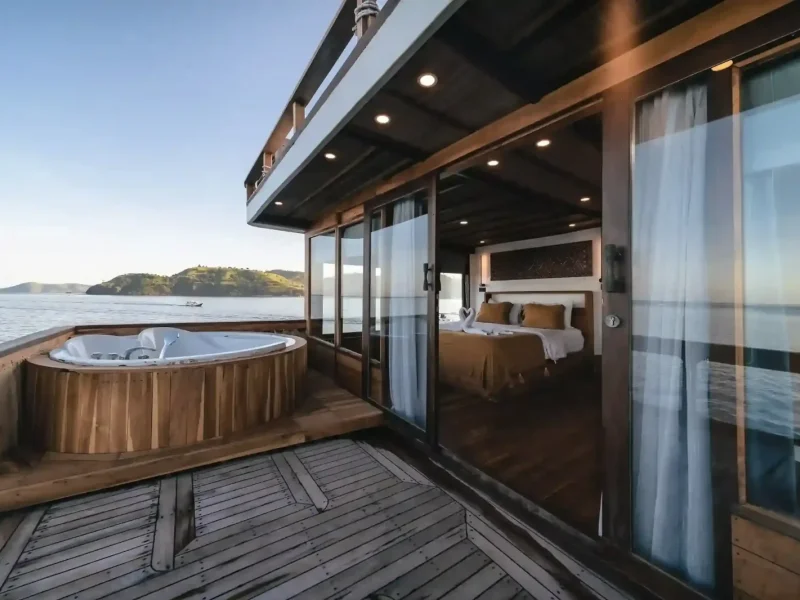
- Vessel types: High‑end wooden phinisi, small expedition yachts, and luxury motor yachts; offered both as full‑boat charters and per‑cabin departures.
- Typical duration: 7–10 nights one‑way Bali–Komodo or Komodo–Bali; some do shorter Komodo‑only loops from Labuan Bajo.
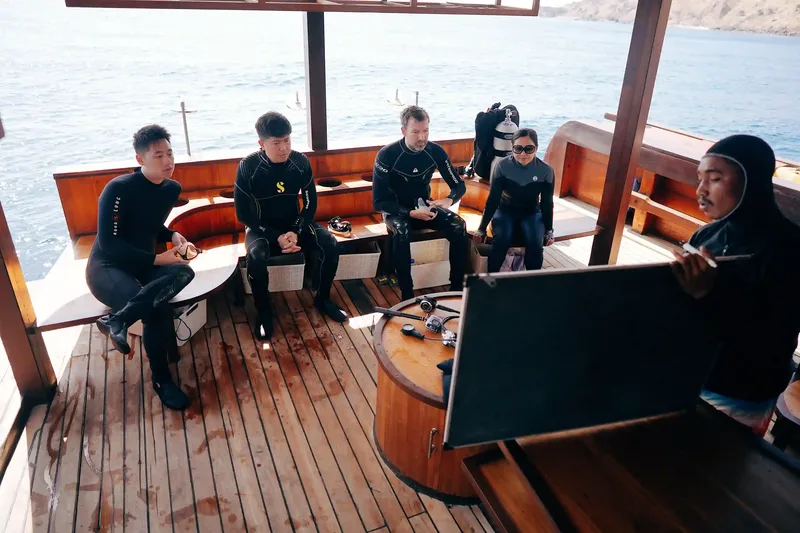
On our side, we meet guests at their South Bali hotel or at the airport, then drive them to Benoa for a mid‑afternoon embarkation. You step directly from the private car onto the yacht, hand over your luggage and dive gear to the crew, and the cruise director does a full safety and dive briefing before departure.
For a day‑by‑day breakdown of routes and land stops, see our detailed Bali to Komodo Cruise (Itinerary, Ports & Stops) guide.
Best Seasons and What They Mean for Diving Conditions
The single biggest factor shaping your experience is timing. Komodo is diveable year‑round, but conditions and encounters vary markedly by season.
April–September: Classic Dry-Season Bali–Komodo Window
- Weather: Generally drier in Bali and Nusa Tenggara; more stable sea conditions on the open‑sea transit days between Bali, Sumbawa, and Komodo.
- Visibility: Often 20–30 m at iconic Komodo sites (can be less in nutrient‑rich upwellings).
- Water temperature: Roughly 26–29°C in northern Komodo; 22–26°C in the south and at upwelling‑influenced sites (thermoclines are common).
- Routing: This is when most high‑end yachts schedule Bali–Komodo–Bali or Bali–Komodo–Flores itineraries, taking advantage of calmer crossings.
If this is your first serious current diving in Indonesia, April–September is generally the easiest period to plan around for a Bali–Komodo through‑cruise.
October–March: Transition, Rainy Season, and Komodo-Focused Trips
- More localised rain and variable sea conditions on the long open‑water legs from Bali, especially December–February.
- Many luxury operators reposition to Raja Ampat and other eastern regions for mid‑wet‑season itineraries.
- Komodo itself stays busy, with most liveaboards embarking in Labuan Bajo rather than Benoa.
If you want a Bali–Komodo–Bali itinerary specifically from Benoa on a luxury yacht, you’ll usually be looking at departures between April and September.
Key Dive Areas on a Bali–Komodo Liveaboard
Routes differ by operator and yacht speed, but the classic eastbound flow from Benoa to Labuan Bajo cuts through several distinct dive zones. Think of it as an ecological gradient rather than just a list of isolated sites.
1. Bali “Warm-Up” Zone
Not every itinerary dives Bali itself, but when time and conditions allow, you may see:
- Nusa Penida / Nusa Lembongan (seasonal add‑on): Famous for manta cleaning stations and seasonal mola sightings (roughly July–October). Currents can be strong; dives are typically guided as drifts.
- Padang Bai / Candidasa (on some routes): Reef slopes, occasional sharks, and sometimes macro. Good as a check‑out environment before pushing further east.
Experience‑wise, these dives already demand comfort in current, controlled descents, and strong buddy awareness.
2. Sumbawa and Saleh Bay Corridor
As you push east from Bali, you move into less crowded reefs and a good mix of macro and wide‑angle:
- Sumbawa coastal reefs: Hard‑coral gardens and sloping drop‑offs, good for relaxed drifts and tuning buoyancy.
- Macro stops: Black‑sand critter sites and night dives are common; think frogfish, cuttlefish, and crustacean life.
This part of the route is usually moderate in difficulty, an ideal stepping stone for divers building confidence before the higher‑energy sites in Komodo.
3. Komodo National Park: The Core Liveaboard Playground
Once in Komodo, your dive days concentrate inside and around the national park. Key zones you’re likely to visit include:
- Central Komodo: Classic reef and current dives with rich fish life. High probability of drift dives and split‑point entries.
- North Komodo: Warmer water and often clearer visibility; schooling fish, reef sharks, and prolific coral.
- South Komodo and Padar region: Cooler, nutrient‑rich water, frequent thermoclines, and densely packed life when conditions cooperate.
Site names and exact profiles vary by operator and weather, but expect a mix of:
- Channels and slopes with medium to strong currents.
- Manta cleaning and feeding sites (season‑dependent).
- High‑octane drifts alternating with more relaxed reef and macro dives.
For a sense of how these dive areas are sequenced with the land excursions (Komodo dragons, viewpoints, beaches), see the sample plans in our Bali to Komodo Cruise (Itinerary, Ports & Stops) section.
Certification Levels and Experience: Who Is Komodo For?
The most important part of any honest Bali Komodo liveaboard diving guide is clarifying who these routes are suitable for. In short: Komodo is not a beginner training ground, but capable newer divers can enjoy it if the itinerary and guiding are chosen carefully.
Minimum Certification Recommendations
- Open Water Diver:
- Suitable for: Selected, easier sites; shallow reef dives; guided macro dives.
- Not ideal for: Signature high‑current channels, advanced drifts, and deeper walls.
- Advanced Open Water (or equivalent):
- Strongly recommended for a full Komodo liveaboard itinerary.
- Gives you training dives in deep and navigation, which are directly relevant in Komodo.
- Rescue Diver + recent experience in current:
- Ideal for divers who want to relax and enjoy the full range of sites.
- Better self‑awareness and problem‑solving skills benefit the whole group.
Experience in Currents and Drifts
Formal certification is only one part of the equation. Just as important:
- Number of logged dives: Aim for at least 30–40 logged dives before taking on a full Bali–Komodo itinerary; 50–100+ is even better.
- Recent dives in the last 12 months: You should be current (no pun intended) before stepping on board.
- Comfort with negative or quick descents: Many Komodo dives require dropping quickly to a target depth to get out of surface current.
- Buoyancy control near reefs and in fast water: Critical to protect both the environment and your own safety.
On our programs, the cruise director and dive guides always reserve the right to adapt sites or profiles based on the real‑world skill level they see in the water, not just what cards someone holds.
Nitrox, Gas Planning, and Typical Dive Profiles
Nitrox has become standard on high‑end Bali–Komodo liveaboards, and it can meaningfully extend your no‑decompression limits on multi‑day trips.
Nitrox Availability and Requirements
- Availability: Most luxury phinisi and expedition yachts now carry Nitrox as standard or as an optional upgrade.
- Certification: You need an Enriched Air/Nitrox card to use it. If you do not have it yet, you can often complete the theory portion online before the cruise and the practical portion on board or in Bali.
- Typical mix: Commonly around 30–32%, adjusted according to dive profiles and maximum depths.
Typical Dive Patterns on a 7–10 Night Trip
- Number of dives: Around 3–4 dives per day including night dives, with one or two “transit days” between Bali and Komodo where you might only dive once or twice due to longer passages.
- Depths: Many key Komodo sites sit between 18–30 m; some shallower reef and macro dives are in the 5–18 m range.
- Bottom times: Vary with current, gas choice (air vs Nitrox), and profile; 45–60+ minutes is common on Nitrox and shallower sites.
Even if you prefer air for personal reasons, Nitrox certification gives the crew more flexibility in planning mixed‑gas groups and optimising safety margins across the week.
Gear, Thermal Protection, and What to Pack
Komodo is in the tropics, but the water is not uniformly warm. Planning gear with that in mind makes a noticeable difference to comfort and safety.
Exposure Protection
- Suit thickness:
- 3 mm full suit is the minimum I recommend for most divers.
- 5 mm full suit or 3 mm + hooded vest is ideal if you chill easily, especially for southern Komodo sites with thermoclines.
- Hood or hooded vest: Very useful on longer trips, particularly where water can drop a few degrees dive‑to‑dive.
- Reef‑safe sunscreen and rash guards: To protect on the surface between dives.
Safety and Comfort Accessories
- Surface Marker Buoy (SMB) + spool: Non‑negotiable in current‑prone areas; many operators require you to carry one.
- Audible signalling device: Whistle or air horn attached to your BCD.
- Dive computer: Each diver should have their own; sharing is not acceptable practice on serious liveaboards.
- Backup mask and spare straps: Small items that can save a dive if something breaks at an inconvenient moment.
Most luxury Bali–Komodo yachts offer high‑quality rental gear, but I strongly recommend bringing your own mask, computer, and SMB at a minimum, as these have the biggest effect on comfort and safety.
Safety Standards and How to Evaluate an Operator
Wild, current‑rich sites are only as safe as the operational standards behind them. A few practical checkpoints will help you choose wisely.
What You Should Expect On Board
- Formal safety briefings: Yacht safety, tender procedures, and dive procedures explained clearly on day one.
- Guide‑to‑diver ratios: Small groups (often 1 guide to 4–6 divers) with the ability to split groups by experience and air consumption.
- Emergency equipment: Oxygen, first‑aid kit, and communication equipment (VHF, satellite phone or equivalent) readily available and in working order.
- Clear dive plans: Entry/exit procedures, maximum depths, current expectations, and contingency plans explained before every dive.
Questions to Ask Before You Book
- “How do you adapt dive sites to different experience levels on the same trip?”
- “What is your maximum planned depth and group size per guide in Komodo?”
- “How many dive guides and tenders are on board, and how are they deployed on high‑current dives?”
- “Is Nitrox available, and is there an additional charge?”
Good operators answer these questions willingly and specifically. If the answers feel vague or dismissive, treat that as a red flag, especially in a region as dynamic as Komodo.
For independent background on Komodo National Park and conservation context, you can cross‑check with organisations such as the Indonesian Ministry of Environment and Forestry and park‑focused NGOs; an example starting point is the UNESCO World Heritage listing for Komodo National Park at whc.unesco.org. For broader safety guidance in adventure travel, you can look at resources like Divers Alert Network (DAN).
Putting It All Together: Planning Your Bali–Komodo Liveaboard
To match this Bali Komodo liveaboard diving guide to a real trip, line up these key decisions:
- Season: Aim for April–September if you want a full Bali–Komodo route from Benoa on a luxury yacht.
- Duration: 7–10 nights gives you time for warm‑up dives, transits, and 3–4 full dive days inside Komodo National Park.
- Certification and currency: Arrive with at least Advanced Open Water, 30–40+ recent dives, and ideally a Nitrox card.
- Gear: Pack a 3–5 mm full suit, your own computer and SMB, and thermal layering for cooler southern sites.
- Operator: Choose a yacht with clear, verifiable safety standards, experienced dive guides, and small dive groups.
If you’d like help matching your experience level to the right vessel, route, and dates, my team at Luxury Cruise from Bali to Komodo | Bali Komodo Luxury Cruise is happy to share sample itineraries, deck plans, and dive‑day schedules.
Ready to plan your Bali–Komodo luxury liveaboard? Reach us directly on WhatsApp at +62 811-3941-4563 or mention booking code when you message so we can send you tailored 2025–2026 yacht and date options.